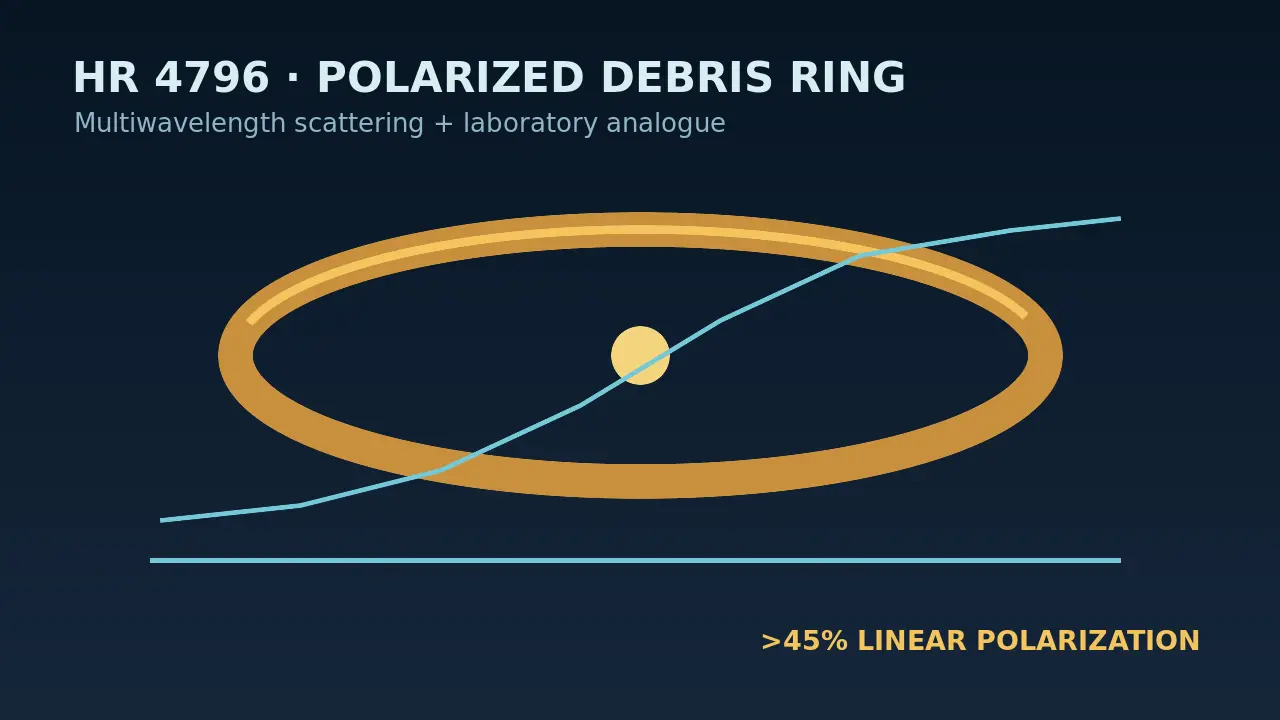
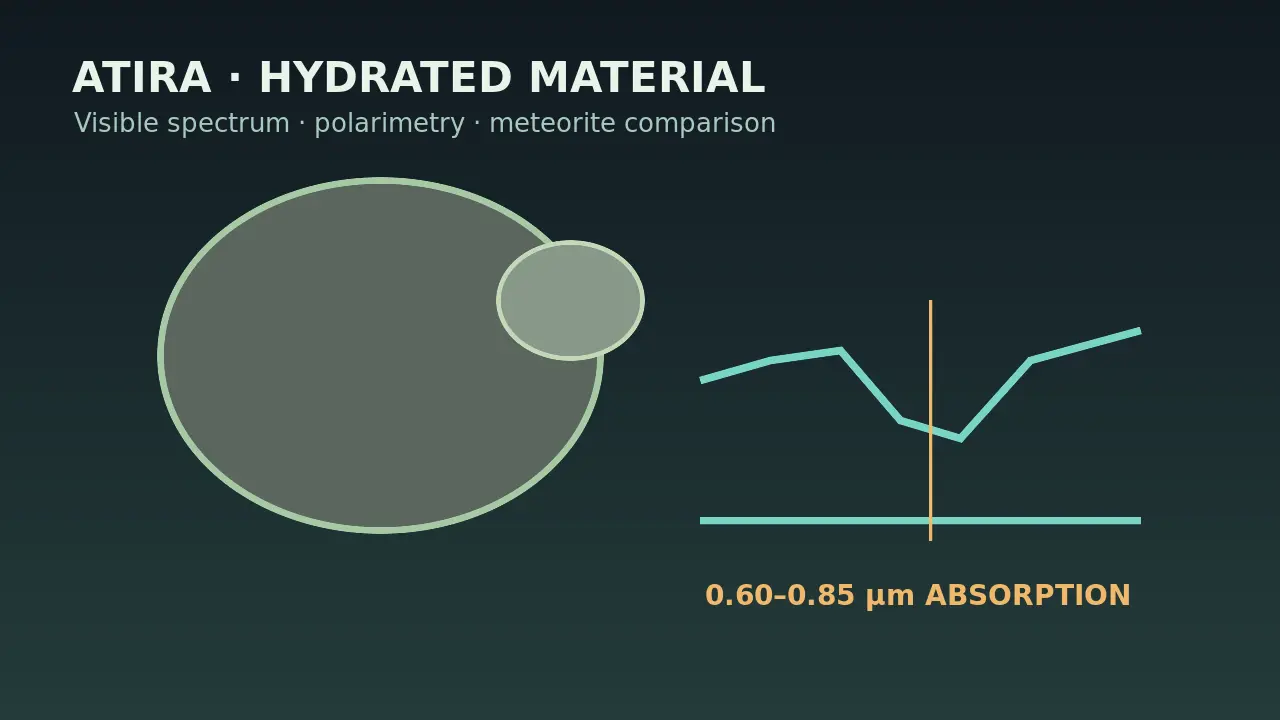
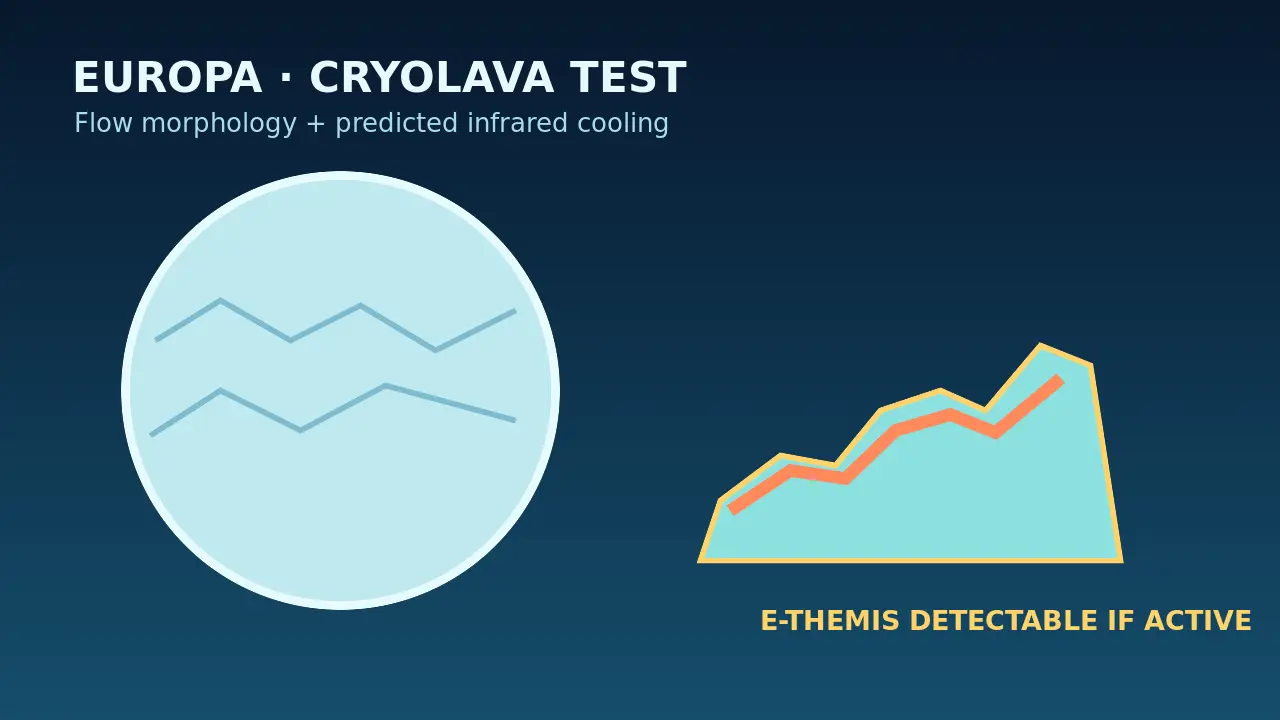
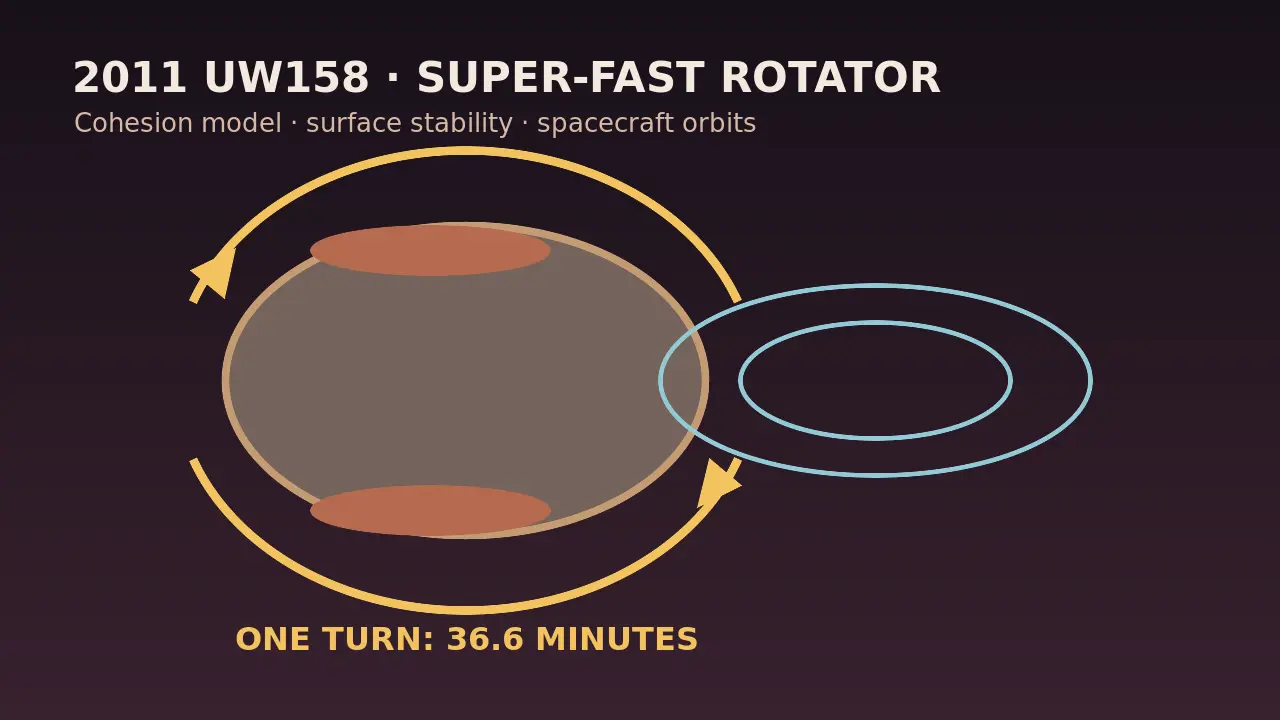
Thursday's UAP board is quiet: no new AARO case resolution, PURSUE tranche, congressional action, or independently verified extraordinary evidence appeared after yesterday's cutoff. Six fresh primary studies make the science desk worth opening anyway. New observations and laboratory comparisons suggest that the narrow HR 4796 debris ring is dominated by large, processed iron-sulfide grains. A separate campaign finds hydrated carbonaceous-chondrite material on the binary near-Earth asteroid Atira. Modeling then asks whether snow-like cryolava can build Europa's smooth plains, while an accepted dynamics study shows how cohesion lets the asteroid 2011 UW158 survive a 36.6-minute rotation. An accepted Ariel strategy paper maps the chemistry questions a thousand-world atmospheric survey could address, and an accepted JWST method recovers moving Solar System objects hidden inside individual detector reads. These are measured properties, model tests, and observing plans—not evidence of extraterrestrial intelligence or nonhuman technology.
New polarimetric imaging and laboratory comparisons tie HR 4796's unusually bright debris ring to large, absorptive grains altered by space weathering.
A coordinated Nordic observing campaign finds a CM-chondrite-like surface on the binary near-Earth asteroid and constrains its reflectance and porosity.
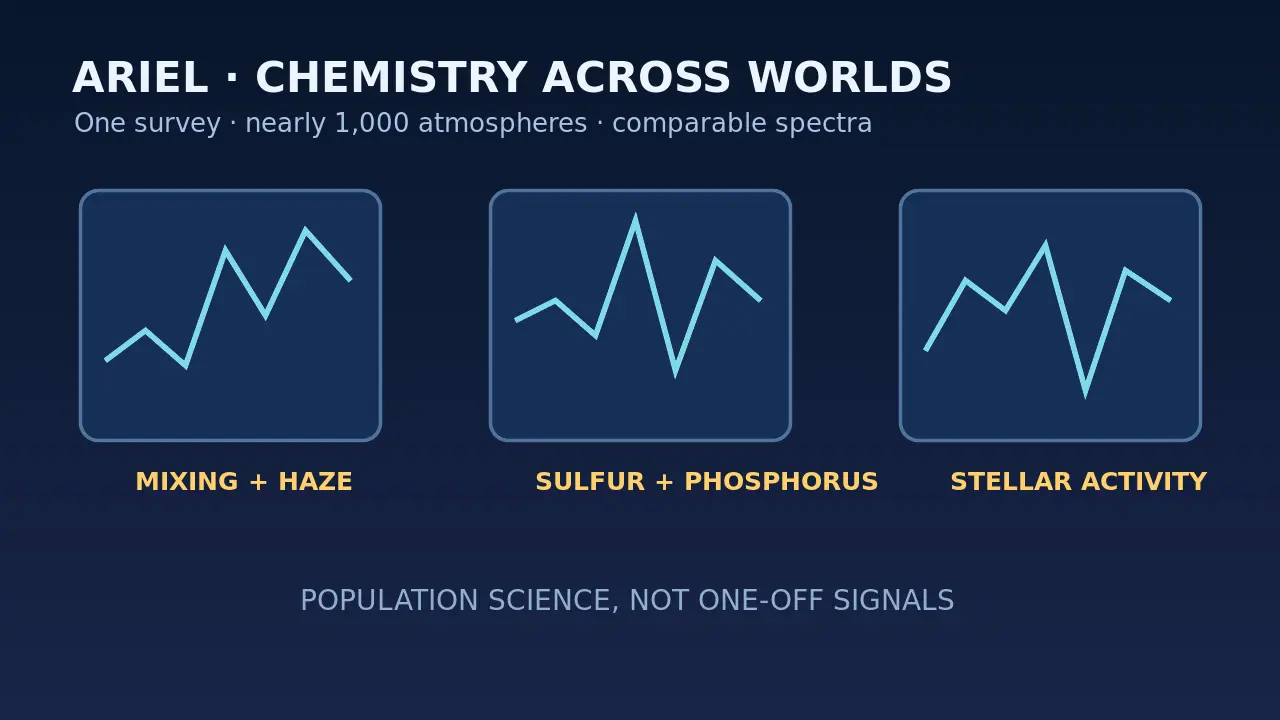
An accepted community paper defines the disequilibrium, haze, stellar, sulfur, and phosphorus questions ESA's survey is designed to compare across worlds.
An accepted method shortens trails inside individual NIRCam exposures and improves sensitivity by roughly 1.1 to 1.4 magnitudes in typical ecliptic data.
Good morning, investigators. Today's lead wears a dramatic nickname but delivers disciplined physics: the 'Sauron's eye' ring around HR 4796 polarizes light in a way that laboratory iron-sulfide grains can reproduce, pointing toward large, processed dust rather than anything engineered. Atira adds a hydrated, carbon-rich asteroid close to the Sun, with important uncertainty still tied to the primary body's volume. Europa's smooth plains may behave like flowing snow in a new cryovolcanic model, and 2011 UW158 needs internal cohesion to keep equatorial boulders aboard while it spins every 36.6 minutes. Looking forward, Ariel's chemistry group lays out how nearly a thousand comparable atmospheres could turn isolated molecular detections into population science. Looking backward through the archive, a new JWST technique splits detector ramps into shorter frames and gains up to roughly 1.4 magnitudes on trailed objects. Six primary sources, three accepted papers, and one excellent reminder that a science result may be visually weird without being remotely mysterious about its origin.
ED’S HIGH THOUGHT · FICTIONAL HUMOR
Whoa, dude… astronomers call HR 4796 'Sauron's eye,' but its ring is full of big iron-sulfide grains, so that is not Mordor—it is the galaxy's cast-iron air fryer. The star has been reheating the same onion ring for millions of years, and the polarization is just every photon hitting the one shiny patch where somebody forgot the parchment paper. If the ring ever tips toward Earth, do not make eye contact. That is when the cosmic smoke detector starts chirping every 43 seconds while an alien on a stepladder removes one moon-sized battery, everybody yells 'It stopped,' and then it chirps again.
Published by Aliens in the Clouds. These AI-assisted summaries link to their sources and distinguish reported claims from established findings. Skinny Ed is a fictional mascot; High Thoughts are comedy. Send a correction with its source.