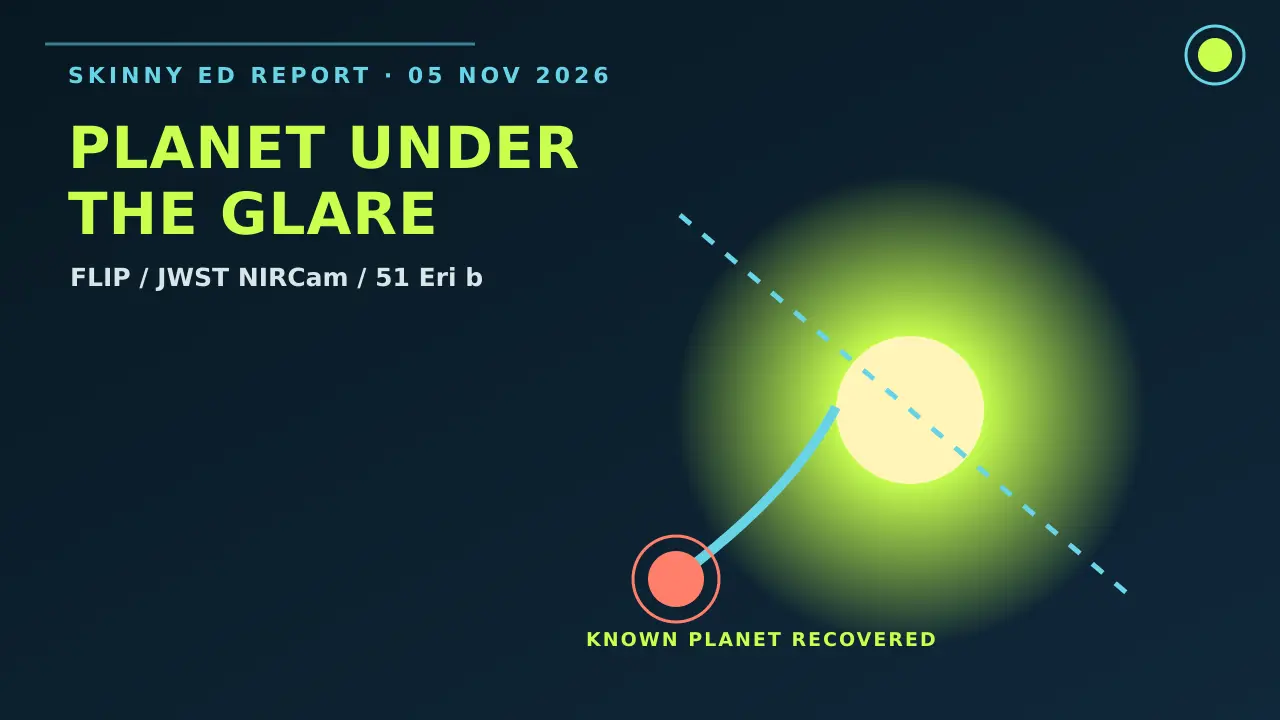
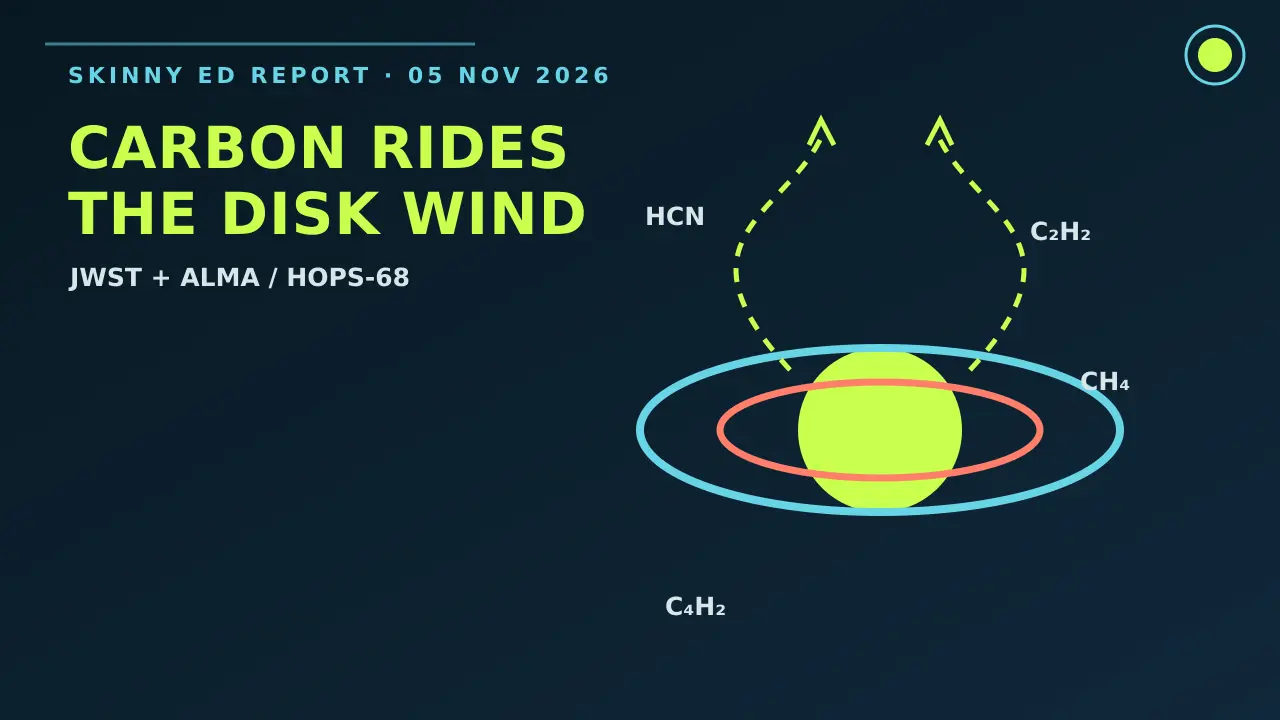
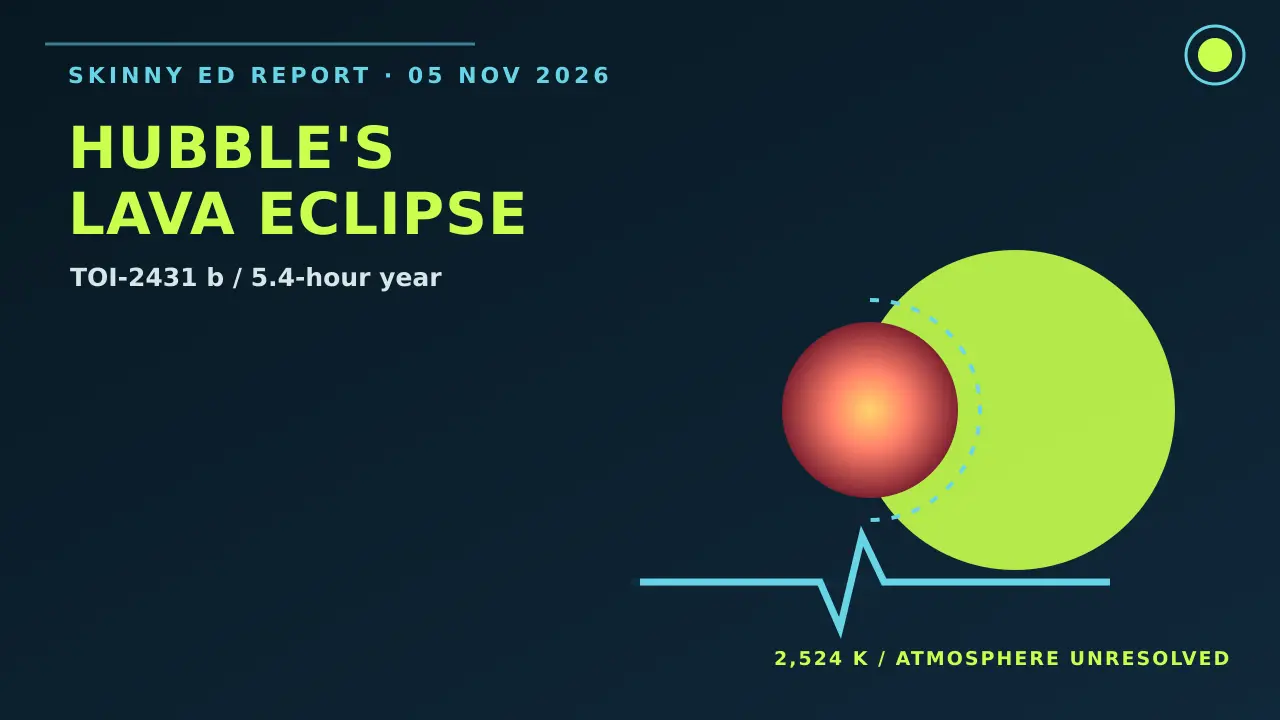
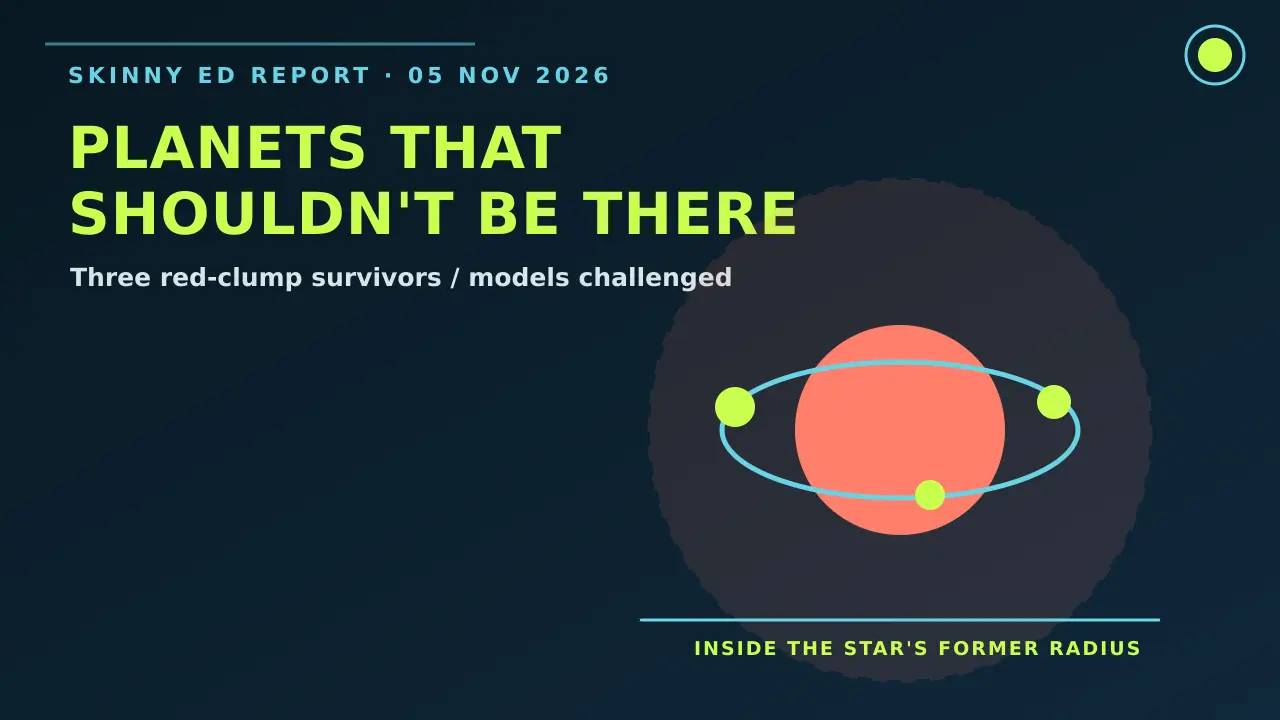
Thursday's edition leads with a practical breakthrough in exoplanet imaging: a new physics-based method builds a digital model of Webb's NIRCam, solves for tiny optical changes, and removes stellar glare precisely enough to recover the known giant planet 51 Eridani b from data where standard processing missed it. The UAP desk is quieter but not empty. Several congressional disclosure advocates won reelection, preserving familiar voices while control of both chambers changes; no new committee, hearing, or disclosure policy has yet followed. A same-day SETI Institute discussion revisits a NASA-funded concept for mapping minerals from tens of kilometers away, and a revised Webb study traces carbon-bearing molecules from a young star's inner disk into an outflow. Four clearly labeled resources worth revisiting round out the board: Hubble's first rocky-planet secondary eclipse, three planets that appear to have survived inside their stars' former red-giant envelopes, FAA records from San Diego's September drone disruption, and a low-density Neptune that may help test how close-in planets migrate. None of today's items detects extraterrestrial intelligence, life, or nonhuman technology.
A physics-based computational method improves direct-imaging sensitivity by two to fifteen times and recovers 51 Eridani b from data that previously concealed it.
Several lawmakers associated with disclosure efforts won reelection as control of both chambers changed; the next committee structure remains undecided.
Today's SETI Live examines a NASA Innovative Advanced Concepts study for mapping minerals from tens of kilometers away during one multi-destination mission.
Good afternoon, investigators. Today's strongest result is not a new telescope or a new planet; it is a better way to understand the telescope we already have. FLIP treats Webb's optics as a changing physical system, then uses the observations themselves to infer the tiny misalignments hiding faint companions in the glare. Recovering 51 Eridani b at its known position is a convincing real-data test, while the larger promise—smaller, colder worlds—still has to be demonstrated. Back on Earth, the election preserves several lawmakers associated with UAP oversight, but seats do not automatically become subpoenas, hearings, or declassification. The FAA records are more concrete: pilots, controllers, a police helicopter, and Naval Air Station North Island all appear in an official incident trail, yet the released material still does not identify every object or confirm the reported shootdown chatter. The science stories carry the same lesson. Hubble measures a lava world's disappearance behind its star without settling whether it has a rock-vapor atmosphere. Webb finds carbon chemistry in a young disk without proving that the same process made Earth's carbon inventory. And three planets sit where current engulfment models say they should not, which is an invitation to improve the model—not permission to invent the rescue. Better tools keep the mystery alive by telling us exactly which part remains mysterious.
ED’S HIGH THOUGHT · FICTIONAL HUMOR
Whoa, dude… TOI-2431 b has a year every 5.4 hours. If its aliens celebrate birthdays like we do, one Earth weekend contains nine birthdays per person. Their civilization never invented agriculture because everyone is constantly at somebody's party eating molten cake. A 48-hour bachelor trip covers nine marriages, three divorces, and retirement. The planet isn't lava from starlight—it's six billion birthday candles nobody can blow out because the atmosphere may already be gone.
Published by Aliens in the Clouds. These AI-assisted summaries link to their sources and distinguish reported claims from established findings. Skinny Ed is a fictional mascot; High Thoughts are comedy. Send a correction with its source.