Exoplanet Imaging
A digital twin pulls a planet out of Webb's glare
A physics-based computational method improves direct-imaging sensitivity by two to fifteen times and recovers 51 Eridani b from data that previously concealed it.
Briefed November 5, 2026 · Aliens in the Clouds
Peer-Reviewed Study · Known Planet Recovered
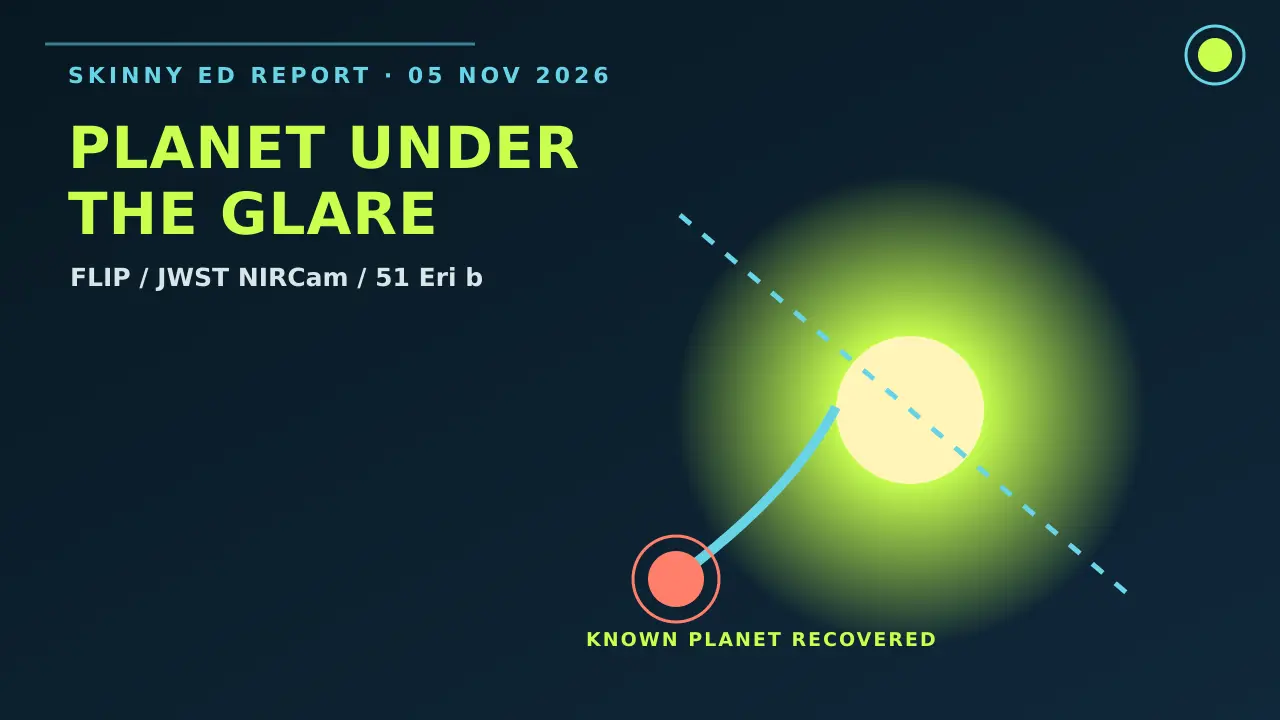
Rodrigo Ferrer-Chavez and colleagues built a flexible physical model of Webb's NIRCam and used automatic differentiation to solve for millions of small optical and observational parameters. The resulting framework, called Physics-based Learning for Imaging Planets, models how stellar glare changes instead of relying only on reference images or statistical patterns to subtract it.
Across observations of HIP 65426, 51 Eridani, and TYC 5899, FLIP improved sensitivity by factors of roughly two to fifteen. Its clearest real-data demonstration recovers the already known giant planet 51 Eridani b at the expected location in a 4.3-micron Webb image where conventional processing did not detect it. The method reveals information already present in the data; it does not create a new planet or yet demonstrate Earth-like worlds.
Why it matters
Direct imaging is limited as much by imperfect knowledge of a telescope's changing optics as by mirror size. A method that learns those physical changes from real observations could extract more science from existing Webb data and influence the design of future exo-Earth missions.
What the source establishes
Peer-reviewed, open-access Nature study published November 4. The two-to-fifteen-fold gains and recovery of a known planet are demonstrated on real Webb observations. Performance on substantially smaller, colder planets remains prospective.
Published by Aliens in the Clouds. These AI-assisted summaries link to their sources and distinguish reported claims from established findings. Skinny Ed is a fictional mascot; High Thoughts are comedy. Send a correction with its source.