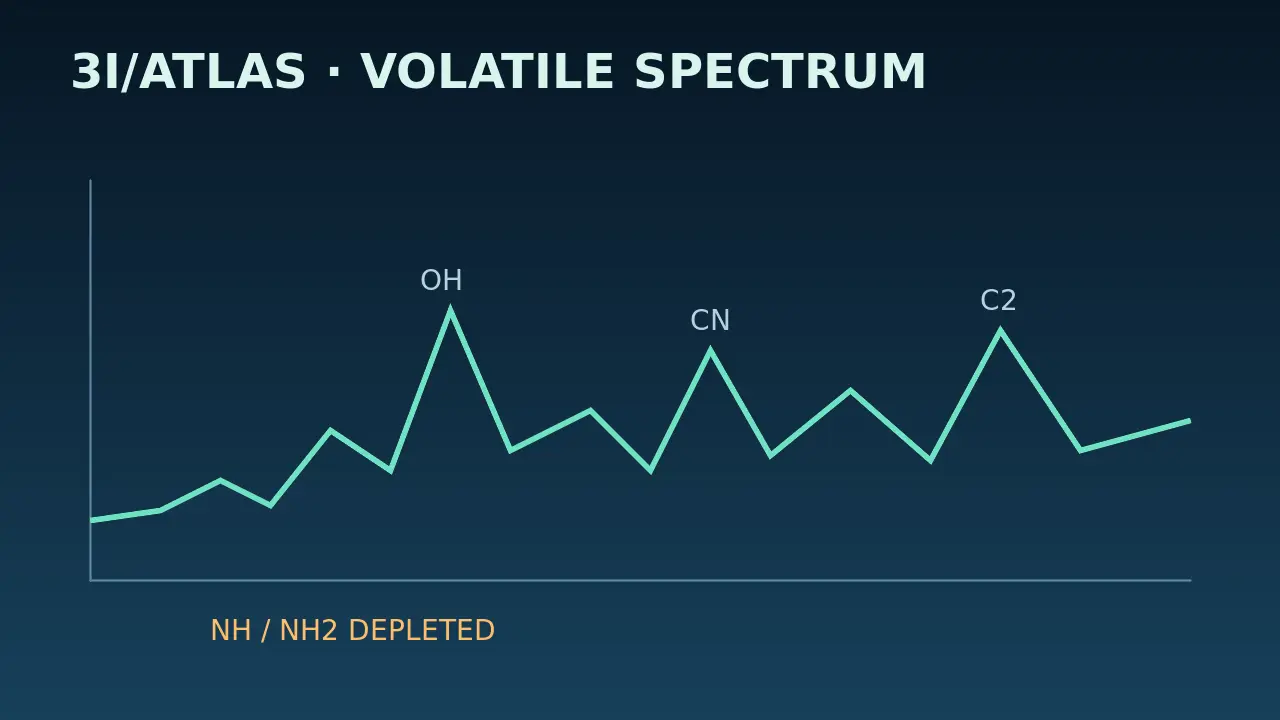
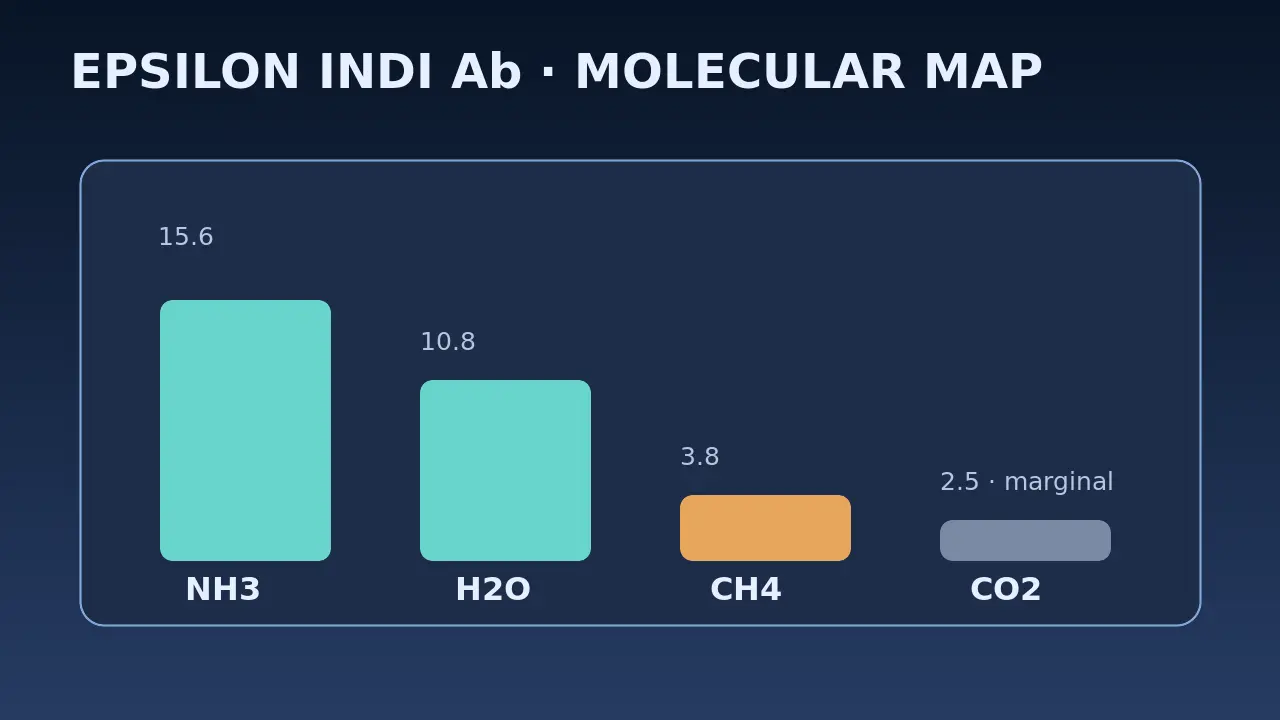
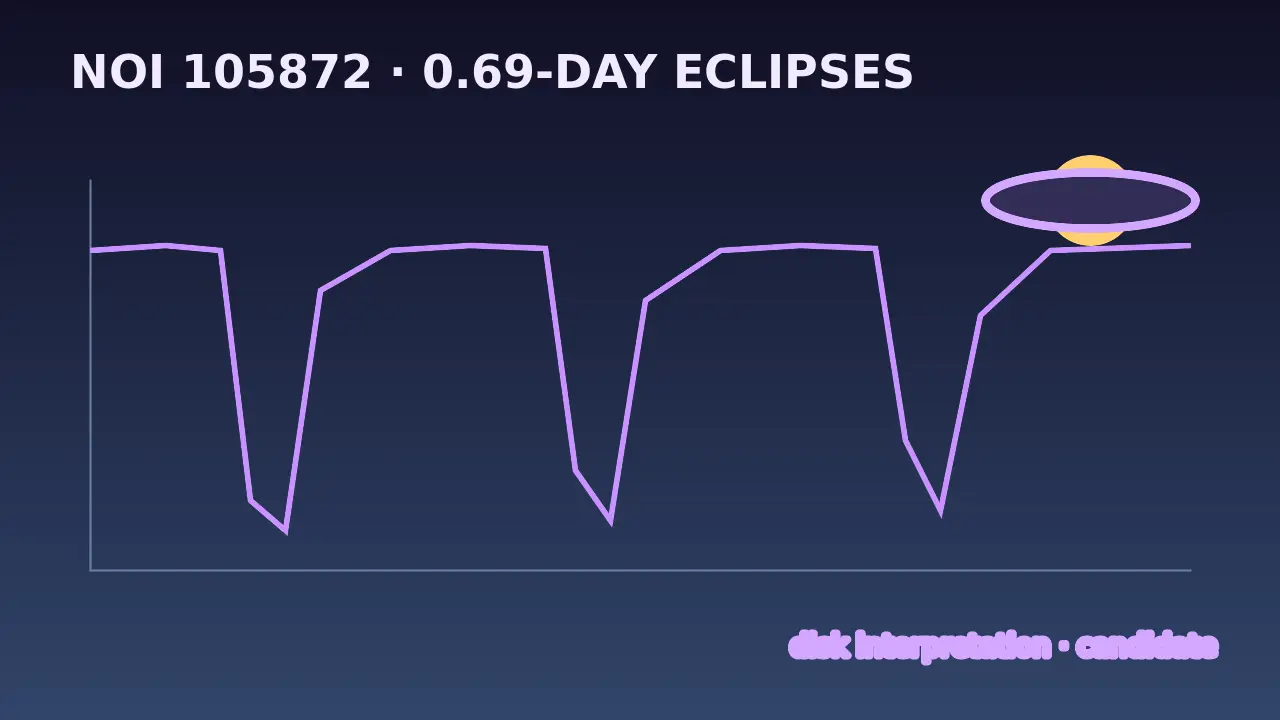
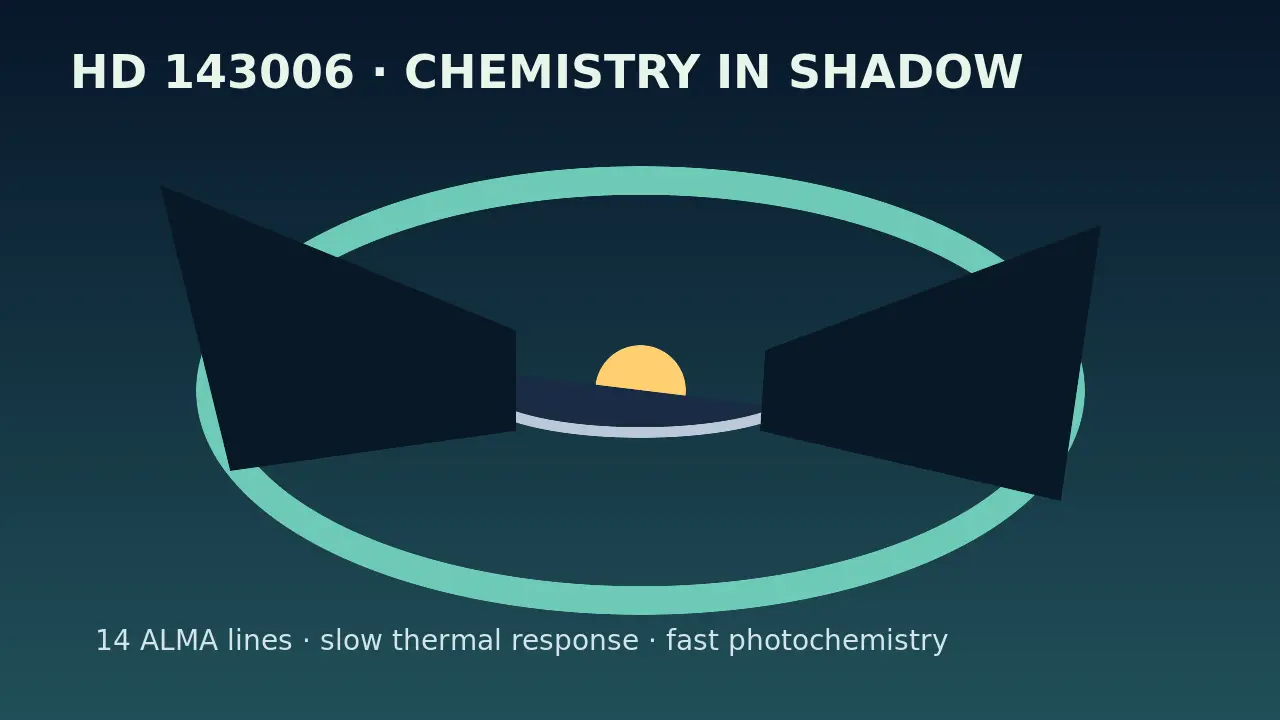
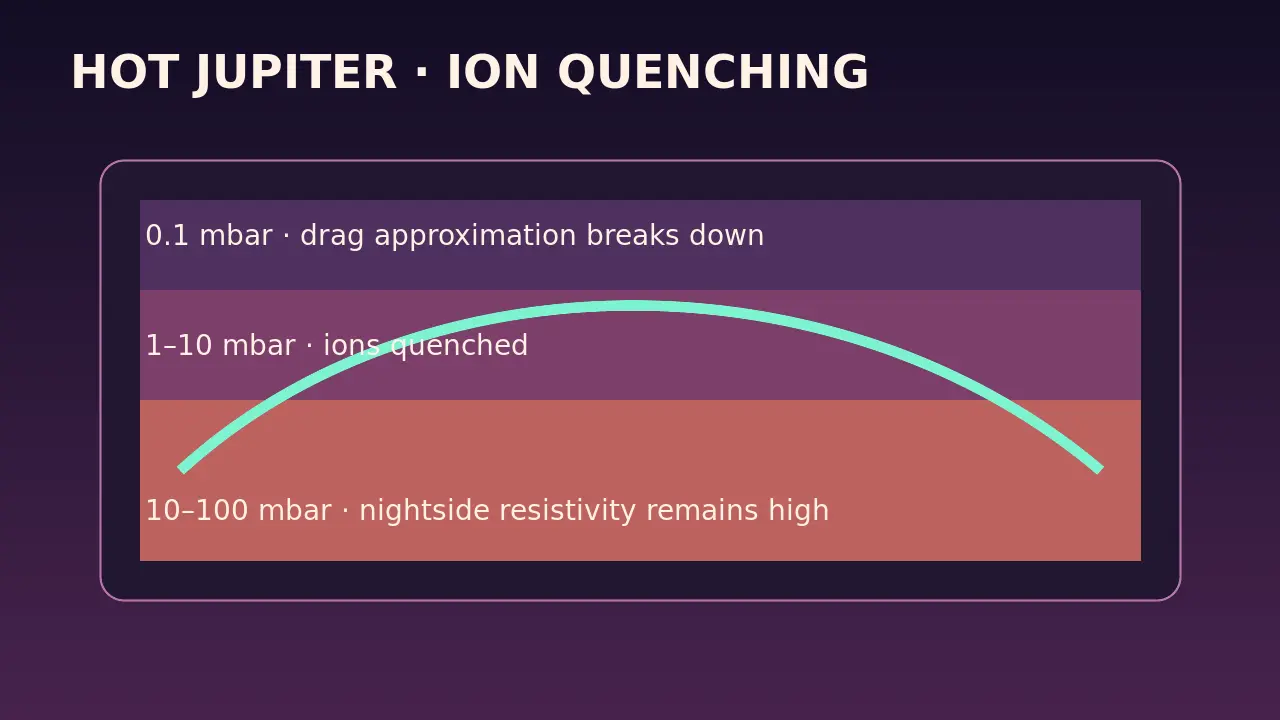
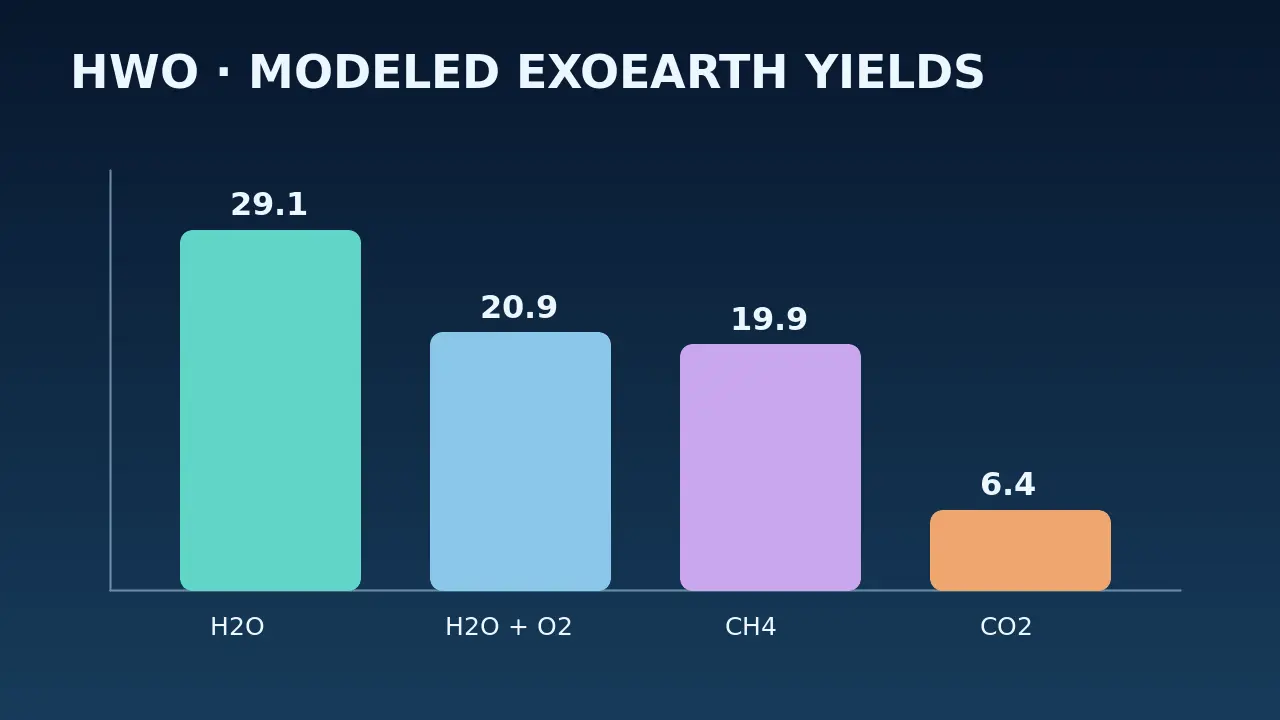
Wednesday's UAP board is quiet: no new AARO case resolution, PURSUE tranche, congressional action, or independently verified extraordinary evidence appeared after yesterday's cutoff. The strongest new primary material is on the astronomy desk. Accepted spectroscopy finds that interstellar comet 3I/ATLAS carries a volatile mixture outside the usual Solar System cluster, while JWST molecular mapping detects ammonia and water in the cold atmosphere of Epsilon Indi Ab. An accepted Orion study presents a rapidly orbiting circumsecondary-disk candidate, ALMA modeling uses a warped disk's shadow to probe chemistry, and hot-Jupiter simulations show why nonequilibrium ion chemistry complicates magnetic-drag models. A sixth accepted study compares how the Habitable Worlds Observatory might trade the number of characterized exoEarth candidates against which molecules it measures. These are natural systems, model-dependent interpretations, and mission forecasts—not evidence of extraterrestrial intelligence or nonhuman technology.
Accepted Interstellar-Comet Study · Astronomy & Astrophysics · arXiv
Good morning, investigators. Today's cleanest result comes from a visitor: VLT spectra place 3I/ATLAS outside the usual Solar System comet chemistry, especially in ammonia-related and carbon-chain species. That is an actual interstellar comparison, not a license to make the comet artificial. JWST then finds ammonia and water in Epsilon Indi Ab, a 275-kelvin super-Jupiter whose spectrum had to be separated from severe stellar contamination. In Orion, decade-long eclipses fit a tiny disk around a low-mass companion, but the companion and disk still need spectroscopy. HD 143006 turns a warped disk's shadow into a chemistry experiment, hot-Jupiter models show ions refusing the convenience of equilibrium assumptions, and the Habitable Worlds Observatory team quantifies an uncomfortable but useful truth: observing more molecules can mean characterizing fewer worlds. Six primary studies, three accepted papers at the top of the board, and no reason to confuse unusual chemistry with engineered chemistry.
ED’S HIGH THOUGHT · FICTIONAL HUMOR
Whoa, dude… JWST found ammonia on Epsilon Indi Ab while 3I/ATLAS arrived from another star practically ammonia-free. That comet is not visiting—it ran away from a planet-sized cat. It crossed interstellar space for millions of years with every window down, finally reached our Sun, and astronomers said, ‘Interesting volatile depletion.’ No, man. That rock saw a litter box the size of Saturn and chose permanent exile. If a 40-million-mile scratching post enters the system, hide Uranus.
Published by Aliens in the Clouds. These AI-assisted summaries link to their sources and distinguish reported claims from established findings. Skinny Ed is a fictional mascot; High Thoughts are comedy. Send a correction with its source.