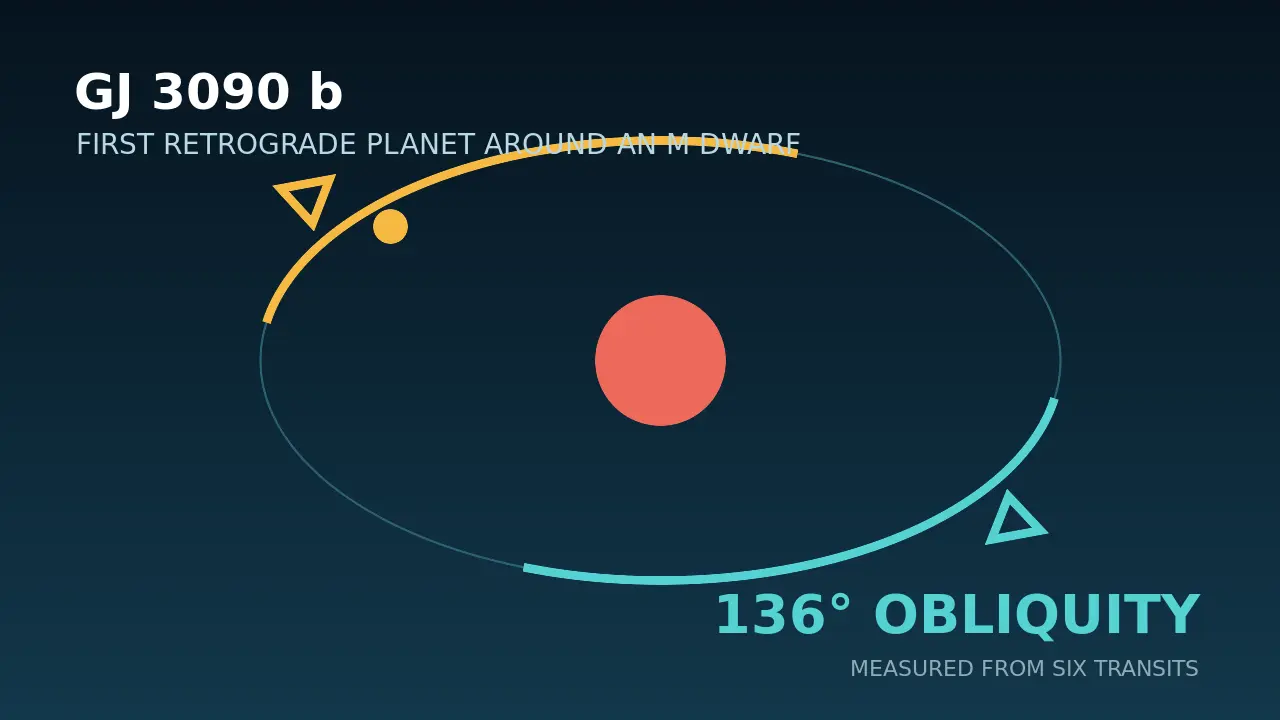
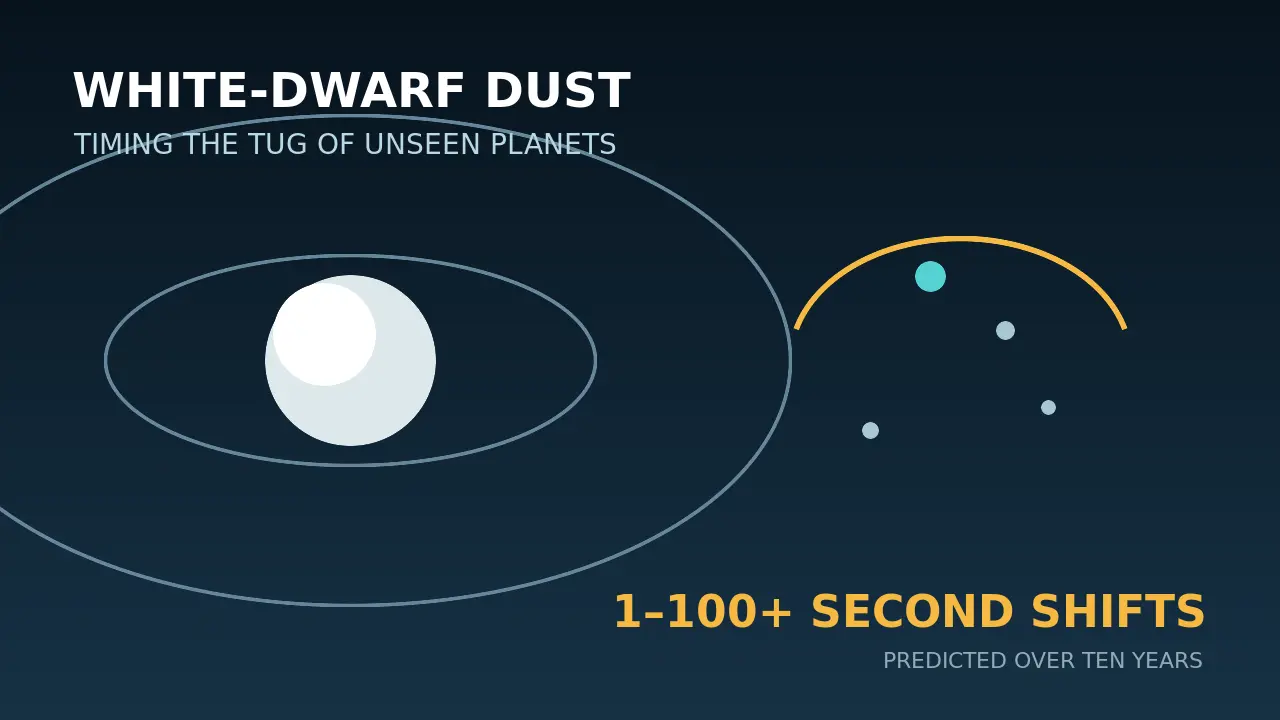
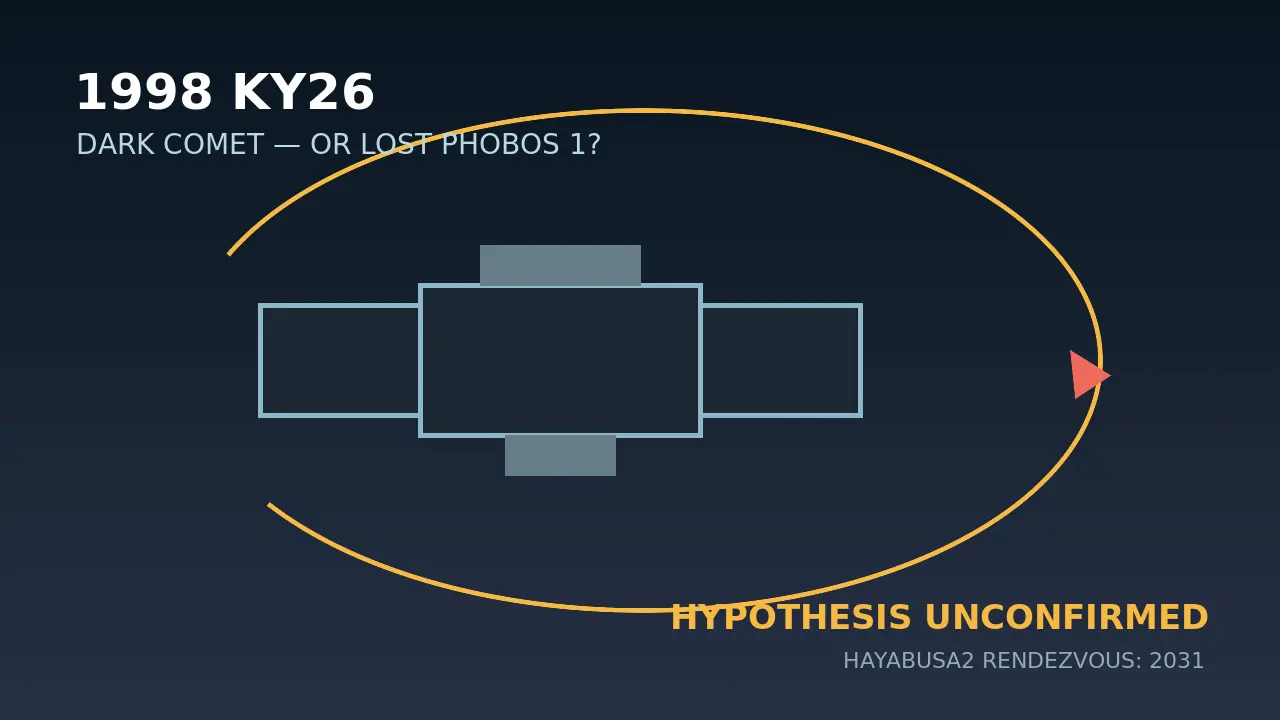
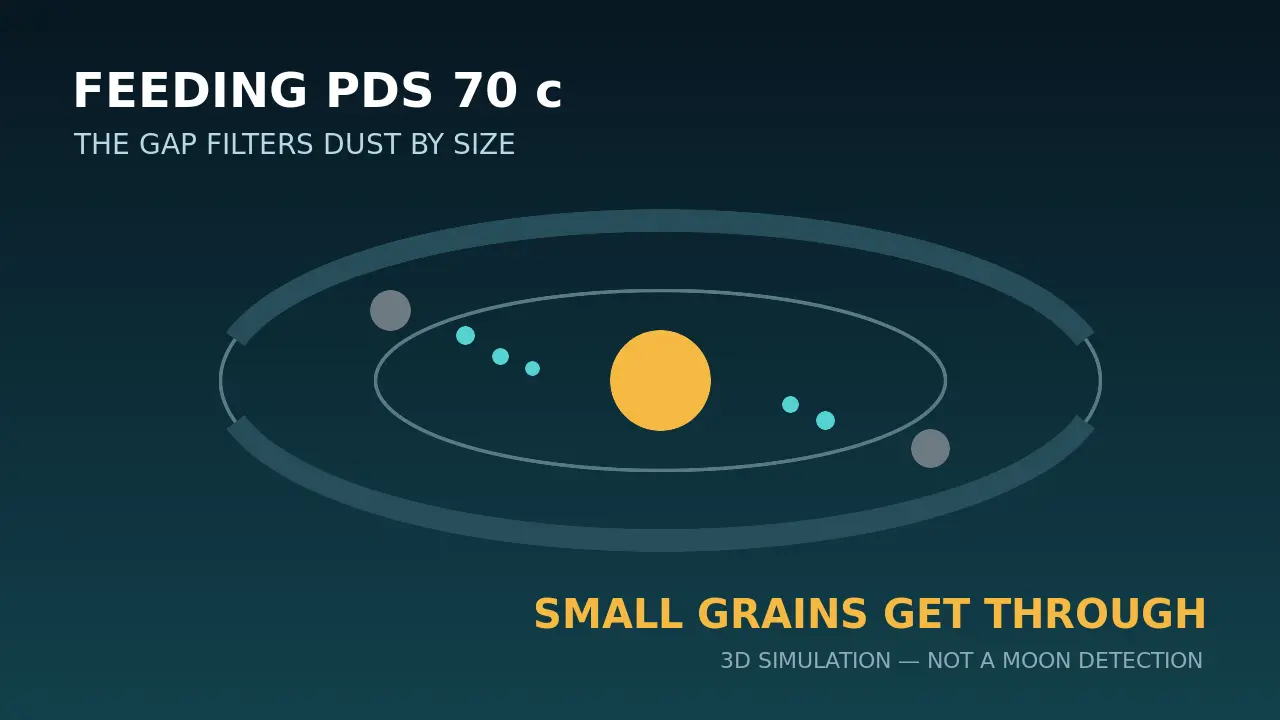
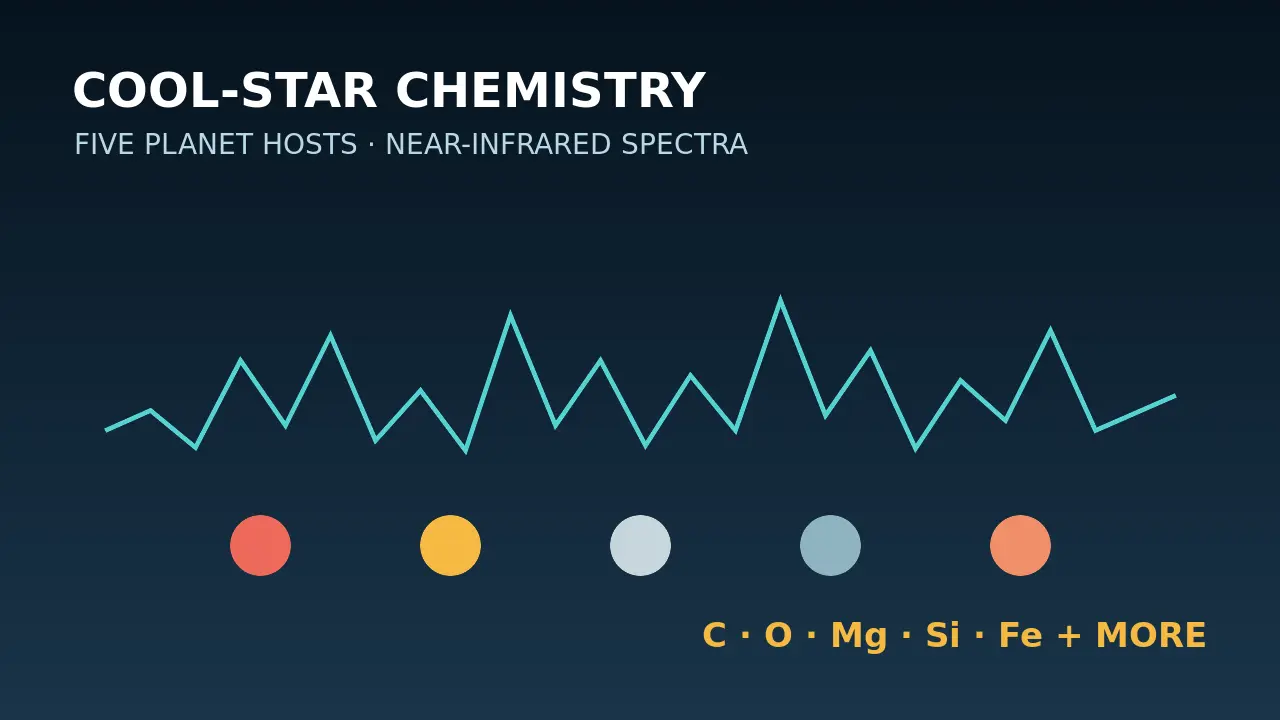
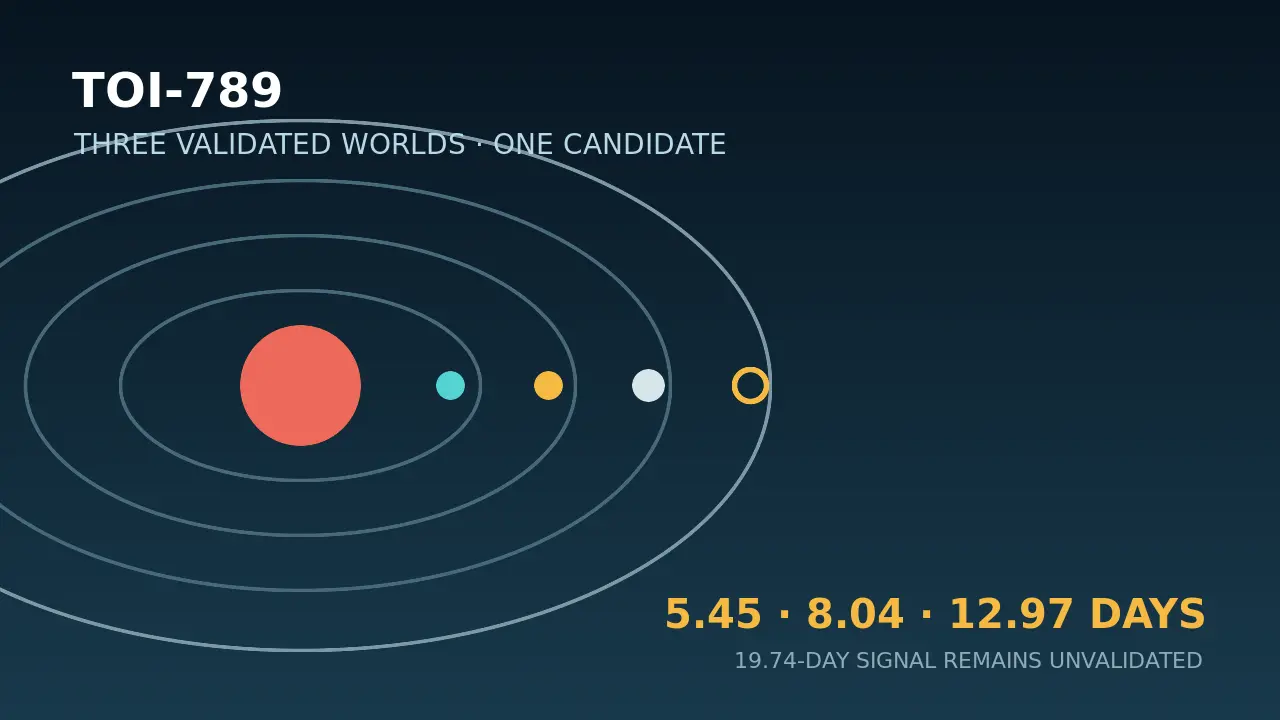
Tuesday's UAP board is quiet: no new AARO case resolution, PURSUE tranche, congressional action, or independently verified anomaly appeared after yesterday's cutoff. The strongest new material is therefore on the science desk. A peer-reviewed measurement identifies GJ 3090 b as the first retrograde planet found around an M dwarf, while an accepted white-dwarf study shows how second-scale changes in dusty transits could betray unseen co-orbiting planets. A separate preprint asks whether the fast-spinning dark comet 1998 KY26 might instead be the lost Soviet Phobos 1 probe; its light-curve and solar-pressure fits make the hypothesis testable, not confirmed. Fresh simulations examine how tiny grains can still feed moon-forming material to PDS 70 c, and a new spectral framework measures the chemical baselines of five cool planet-host stars. One Worth Revisiting accepted paper closes the edition with three validated terrestrial worlds around TOI-789 and a fourth temperate candidate that remains below the validation threshold. None of these results is evidence of extraterrestrial intelligence or nonhuman technology.
Peer-Reviewed Exoplanet Research · Astronomy & Astrophysics · arXiv
Good morning, investigators. Today's most useful word is orientation. Six NIRPS and HARPS transits put GJ 3090 b on a genuinely retrograde path, but the proposed history of how its disk became misaligned remains an inference. White-dwarf dust offers a different kind of orbital clue: an unseen planet can tug transit timing by seconds or minutes, turning a messy debris signal into a detection strategy. Then comes the day's irresistible hypothesis—1998 KY26 may be the lost Phobos 1 spacecraft. The model fits are interesting, the identity is not settled, and Hayabusa2's 2031 rendezvous is the sort of future test a good speculation should invite. PDS 70 c's moon-forming disk and the chemistry of five small-planet hosts add two reminders that models need declared assumptions, while TOI-789 keeps its fourth world honestly labeled a candidate. Six stories, one confirmed backward orbit, one possible spacecraft wearing an asteroid name, and no reason to confuse a productive question with a finished answer.
ED’S HIGH THOUGHT · FICTIONAL HUMOR
Whoa, dude… if the ‘dark comet’ 1998 KY26 is actually the lost Soviet Phobos 1 probe, then spacecraft do not die—they go off-grid. This thing may have spent forty years spinning every five minutes, wearing an asteroid name like a fake mustache, and dodging every call from Moscow. When Hayabusa2 arrives in 2031, it is going to knock on the hull and a cassette deck will blast the Soviet anthem at 1,700 RPM while one tiny wrench floats out and demands political asylum.
Published by Aliens in the Clouds. These AI-assisted summaries link to their sources and distinguish reported claims from established findings. Skinny Ed is a fictional mascot; High Thoughts are comedy. Send a correction with its source.