Friday's UAP board remains quiet: no new AARO case resolution, PURSUE tranche, congressional action, or independently verified extraordinary evidence appeared after yesterday's cutoff. The science desk, however, delivered six fresh primary studies. Hubble has now detected the visible-light counterpart of Beta Pictoris's enormous 'Cat's Tail' and traced it to highly porous organic-rich grains, while interferometry finds a separate compact hot-dust structure close to the same star. Long-term radial-velocity work puts model-sensitive mass constraints on the infant planets of V1298 Tau. Early Rubin Observatory validation data show how sparse multicolor visits can recover asteroid spins and taxonomies. Laboratory irradiation experiments warn that a familiar deuterated-water band can disappear from amorphous ice, and impact simulations test whether a primordial collision involving Titan could have supplied material for Iapetus. These are observations, calibrated methods, laboratory results, and numerical scenarios—not evidence of extraterrestrial intelligence or nonhuman technology.
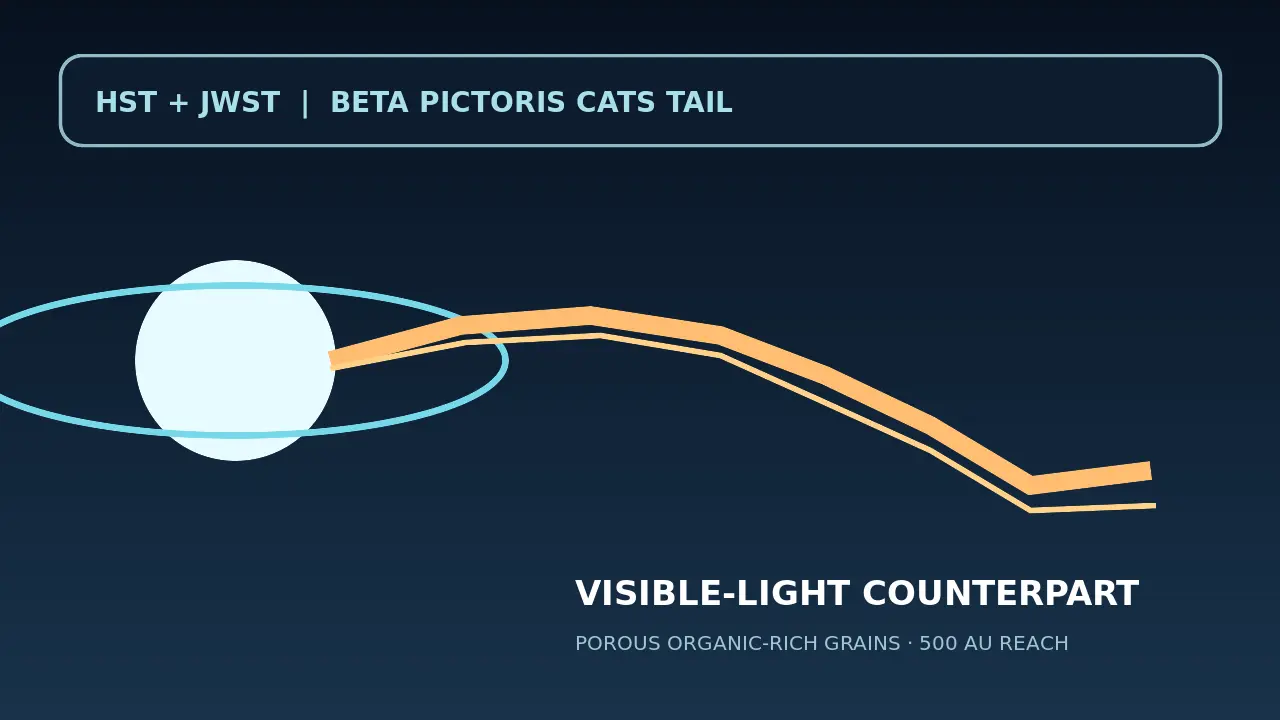
Accepted Hubble Debris-Disk Study · The Astrophysical Journal Letters · arXiv
Six epochs reveal the immense debris feature beyond the main disk and point to porous, organic-rich grains from a collision between dwarf-planet-scale bodies.
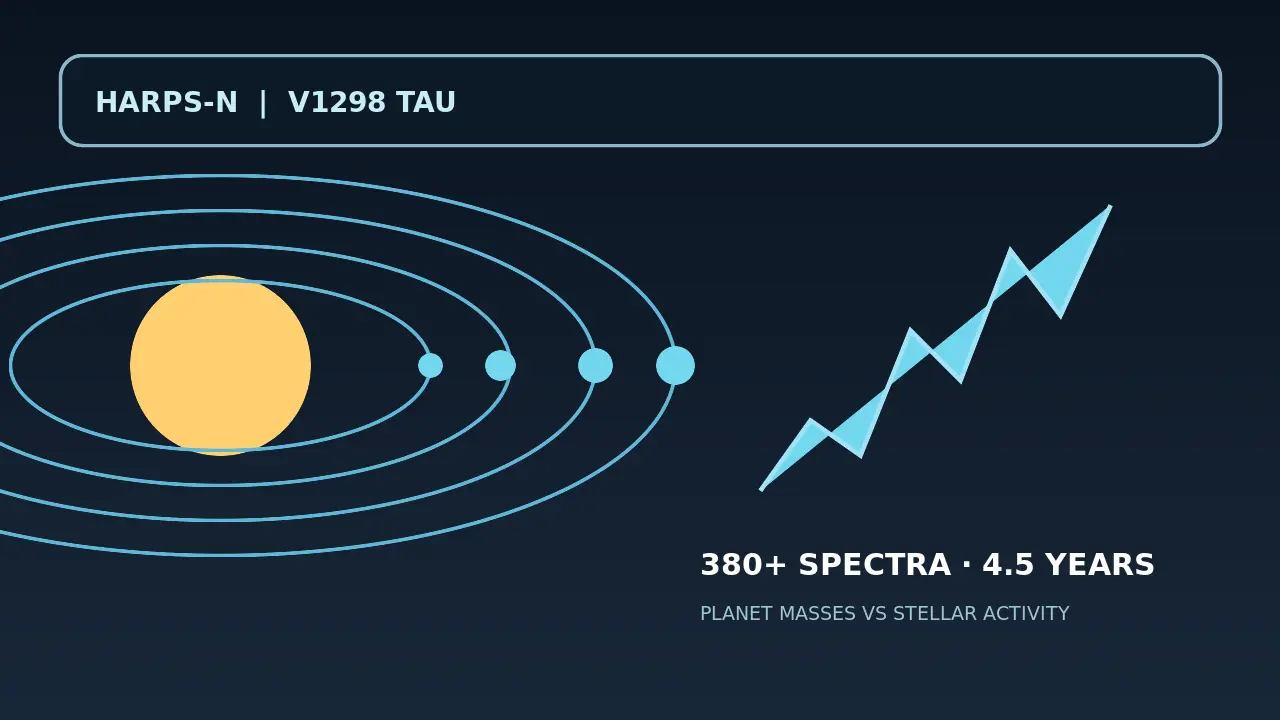
More than 380 HARPS-N observations favor giant-planet masses for V1298 Tau b and e in some models, while exposing how stellar activity controls the answer.
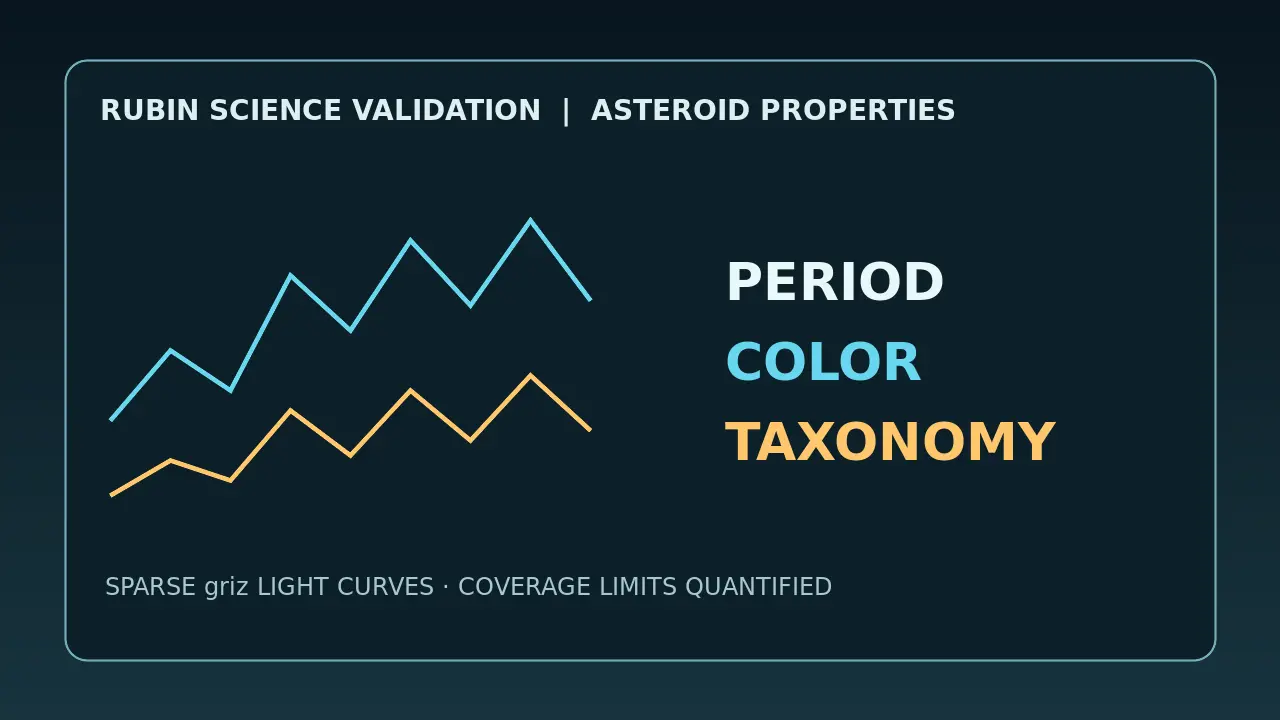
An accepted validation study extracts rotation periods and taxonomies from sparse, irregular multiband observations—and maps where the method stops being robust.
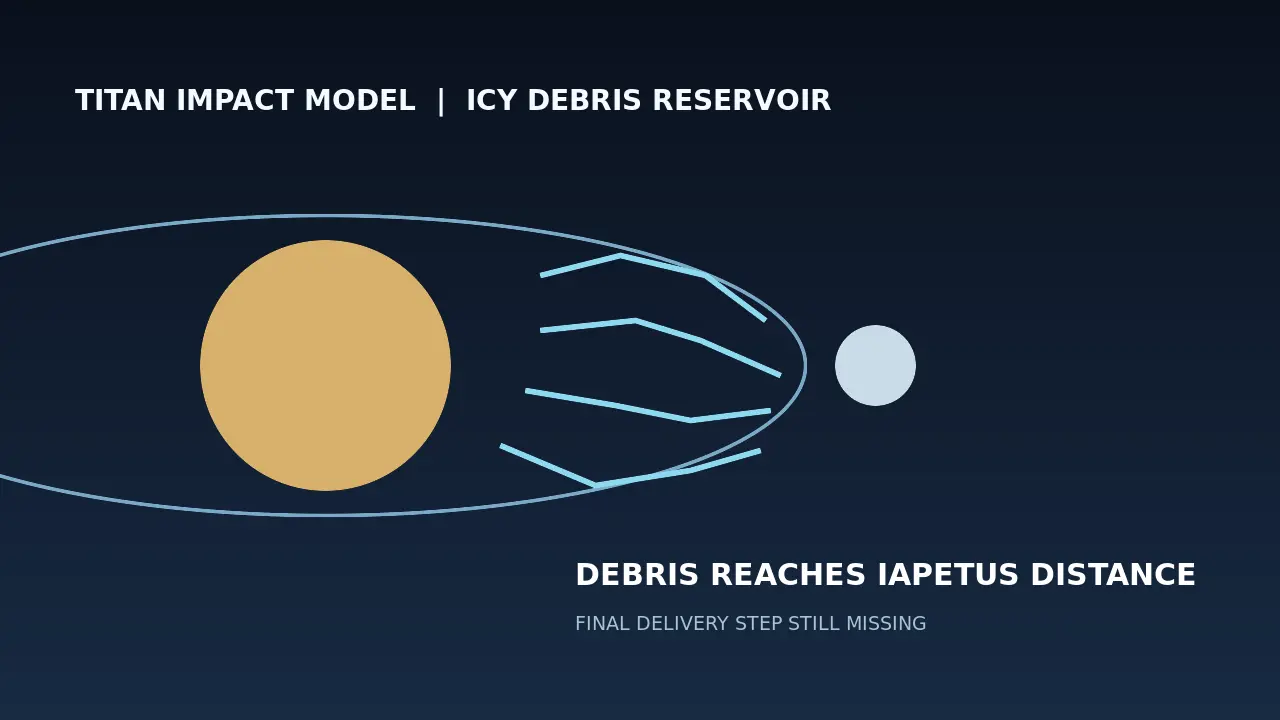
Three-dimensional impact simulations eject Saturn-bound ice and excite Titan's orbit, but another mechanism is still needed to finish the delivery route.
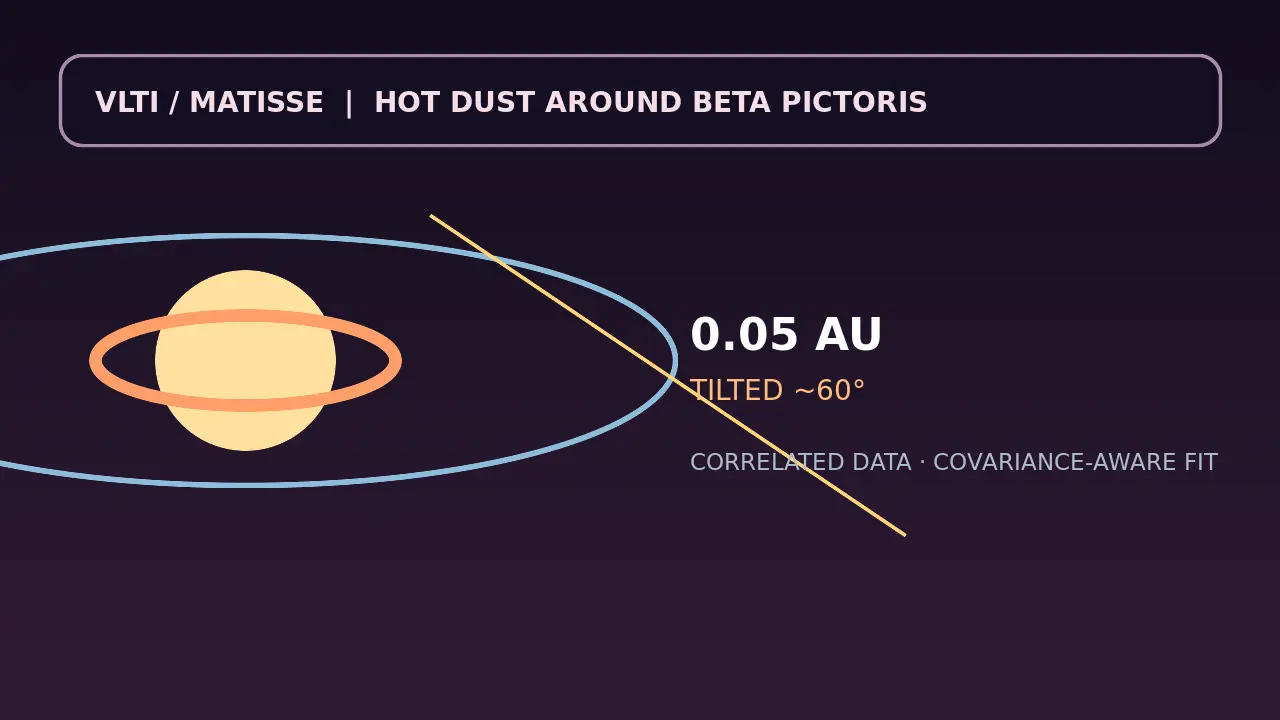
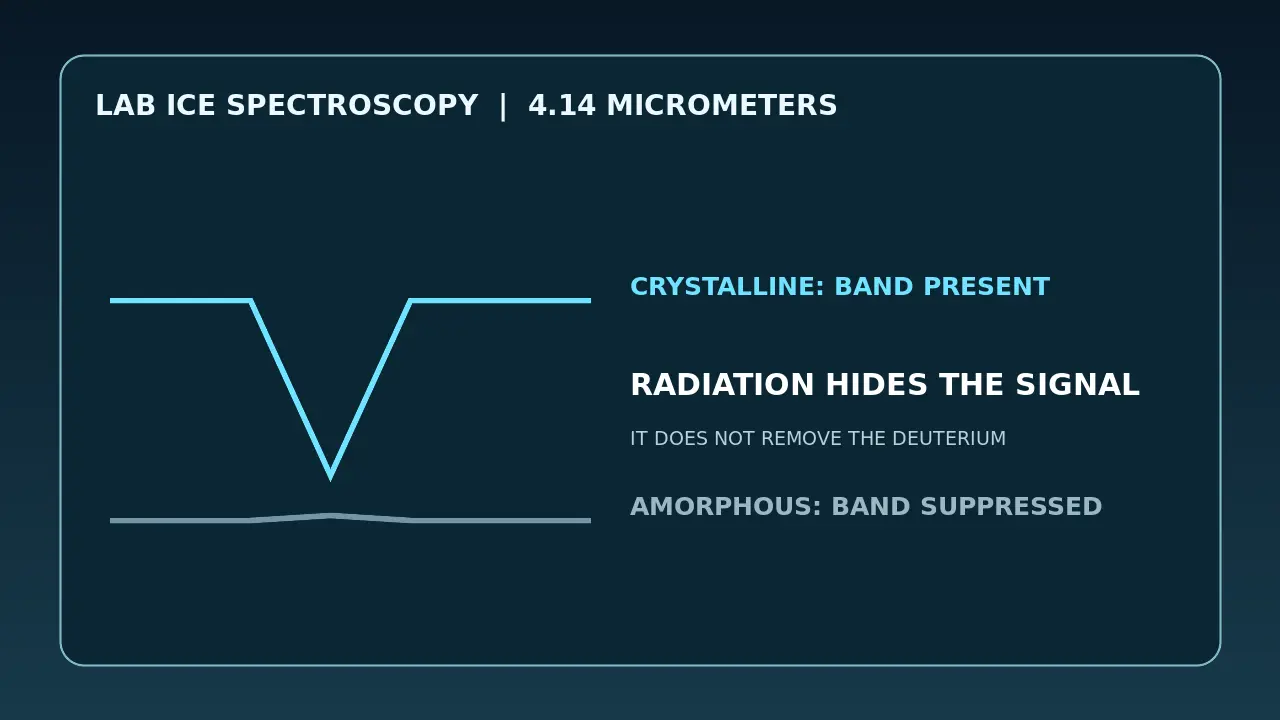
Good morning, investigators. Today's lead is a real tail with a less literal cat: six Hubble epochs reveal Beta Pictoris's Cat's Tail in scattered light, and the grain model favors highly porous organic refractory material produced by a collision between objects at least roughly Charon-sized. A second Beta Pictoris study moves inward to a compact hot-dust structure near the sublimation radius, where properly handling correlated interferometer data materially changes what can be inferred. V1298 Tau reminds us that young, active stars make planet weighing brutally difficult; some models favor giant-planet masses for b and e, but the answers depend on the extraction and activity treatment. Rubin's early validation survey turns irregular multiband visits into preliminary asteroid spin and taxonomy measurements, while an ice experiment shows radiation can hide the 4.14-micrometer HDO band without removing the underlying deuterium. Finally, Titan-impact simulations can make an icy debris reservoir and excite Titan's orbit, but they do not yet complete Iapetus's delivery route. Six fresh primary sources, four accepted or published studies, and one very large celestial tail that still belongs to dust physics rather than mythology.
ED’S HIGH THOUGHT · FICTIONAL HUMOR
Whoa, dude… Hubble found Beta Pictoris's Cat's Tail, and another telescope found hot dust tilted 60 degrees near the same star. That is not a planetary system—it is a house with one enormous cat. The outer disk is its tail sweeping organic grains off the coffee table; the inner dust is litter kicked 0.05 astronomical units across the bathroom at 3 a.m. We call the planets Beta Pic b and c, but those are just two water glasses it has not knocked over yet. If Hubble finds a 500-AU cardboard box, evacuate: the cat will sit in it and erase half the southern sky.
Published by Aliens in the Clouds. These AI-assisted summaries link to their sources and distinguish reported claims from established findings. Skinny Ed is a fictional mascot; High Thoughts are comedy. Send a correction with its source.