Worth Revisiting · Signal Verification
BLC1 shows how a compelling signal earns—and loses—candidate status
Worth Revisiting: The Proxima Centauri signal passed several early checks before lookalikes, interference analysis, and failed redetection traced it to human technology.
Briefed September 28, 2026 · Aliens in the Clouds
Human Interference Identified
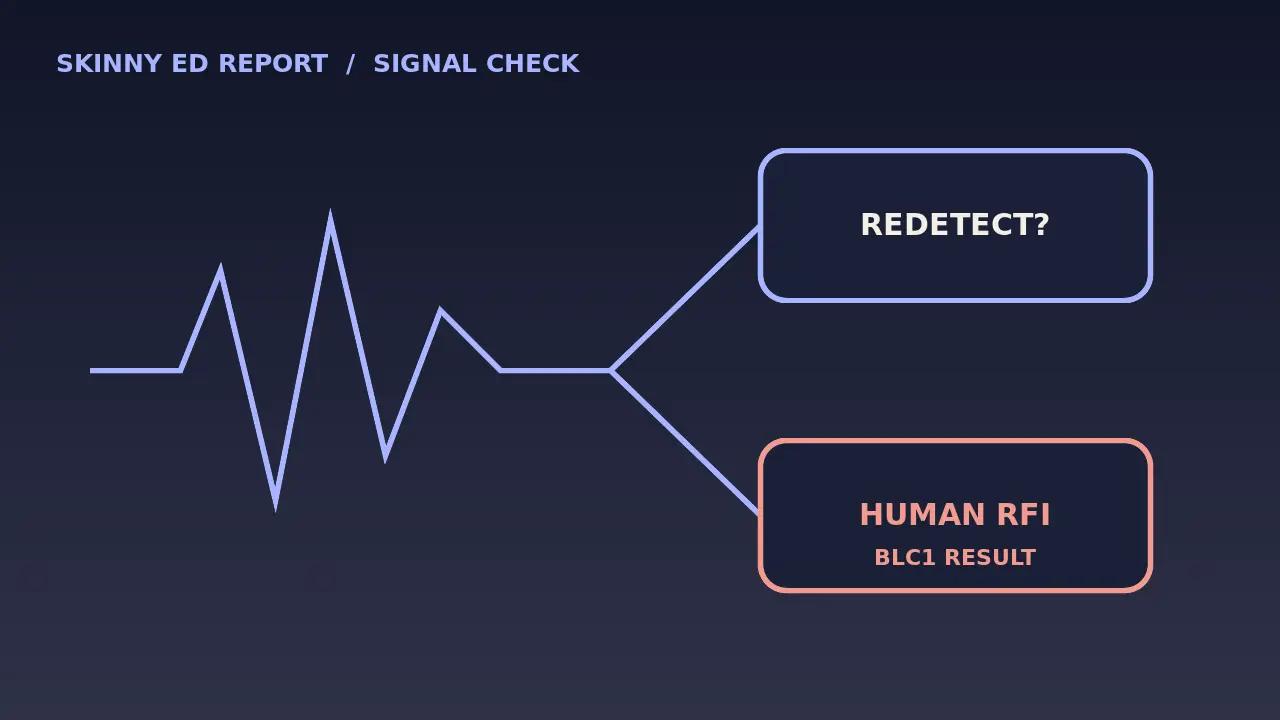
Breakthrough Listen detected BLC1 near 982 megahertz during 2019 observations toward Proxima Centauri. It was narrow, drifted in frequency, persisted for about five hours, and initially appeared in on-target observations rather than the intervening off-target pointings. Those features made it a serious signal of interest and justified months of analysis rather than an immediate dismissal or announcement.
The team ultimately concluded that BLC1 was a complex intermodulation product involving multiple human-generated interferers. Related lookalike signals appeared elsewhere in the observing band, and 39 hours of follow-up observations found no recurrence. Berkeley's public verification flowchart preserves the instructive part: source switching, spectral fingerprints, drift behavior, archival searches, and redetection are gates a candidate must pass—not decorative caveats added after a headline.
Why it matters
A high-quality false positive is a rehearsal for discovery. Publishing why BLC1 failed gives future teams a stronger test for the signal that might not.
What the source establishes
Worth Revisiting · Published analysis and open verification materials. BLC1 was ruled out as a technosignature and attributed to human radio interference.
Published by Aliens in the Clouds. These AI-assisted summaries link to their sources and distinguish reported claims from established findings. Skinny Ed is a fictional mascot; High Thoughts are comedy. Send a correction with its source.