Monday's board is about the gap between a compelling claim and data another person can inspect. POLITICO reports that members of the administration's UAP Science Advisory Council have been meeting regularly but are still waiting for meaningful government data. In a separate interview, former Air Force intelligence specialist Dylan Borland stated that the government possesses recovered craft; he supplied no public document, image, material sample, or independently testable measurement with the assertion. A new public-radio series then asks what should happen if a real extraterrestrial detection survives verification. Because the fresh-news lane remains thin, three clearly labeled Worth Revisiting items return to the machinery of verification: a peer-reviewed FAST signal-search pipeline, the BLC1 false positive, and NASA's UAP data guidance. None reports extraterrestrial technology, and none turns an unresolved observation into proof of one.
POLITICO reports that the administration's scientific advisers have met regularly but have not yet received the meaningful government datasets they expected to review.
The former Air Force intelligence specialist answered yes when asked whether the government possesses recovered craft, but the interview offered no inspectable evidence.
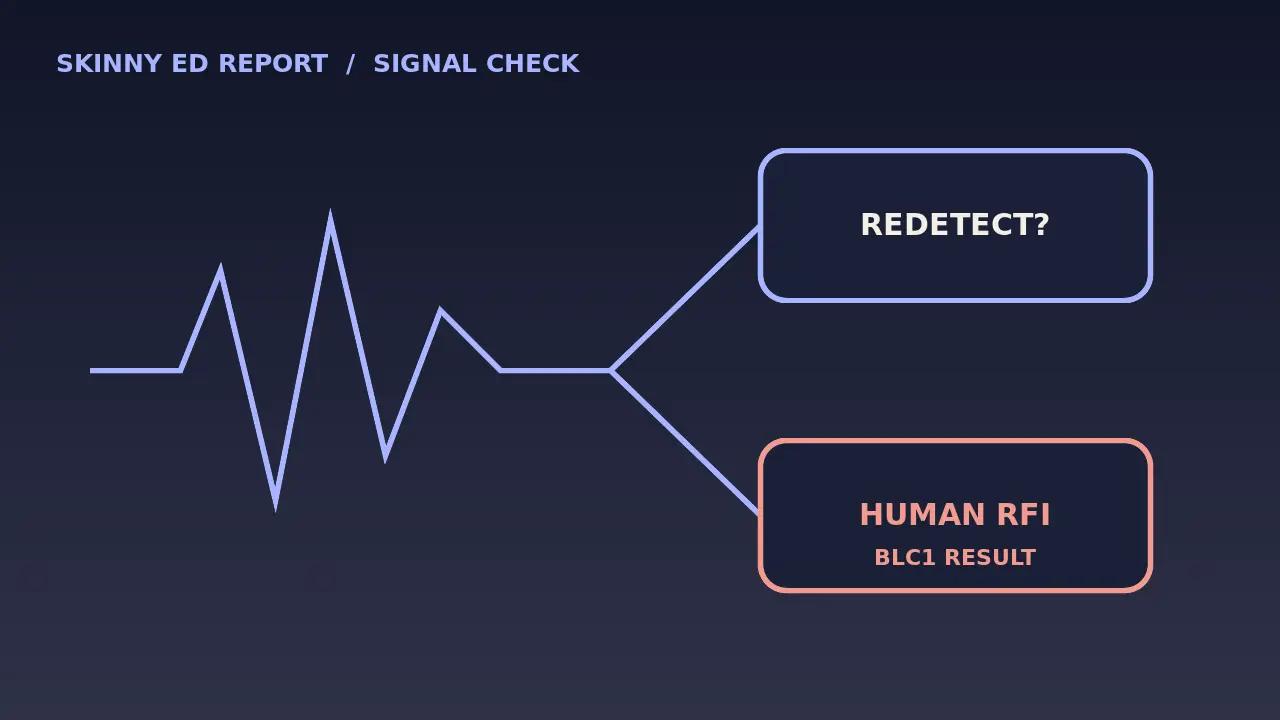
Worth Revisiting: The Proxima Centauri signal passed several early checks before lookalikes, interference analysis, and failed redetection traced it to human technology.
Worth Revisiting: NASA says limited data prevents scientific conclusions and frames its 2023 study as a roadmap for future collection rather than a case review.
Good morning, investigators. Today's lead is institutional accountability. Scientists recruited to review government UAP information cannot evaluate what they have not received, and POLITICO's reporting says the advisory council is still waiting for the meaningful data access that would make its expertise useful. Dylan Borland's newly amplified recovered-craft statement is important because it is direct and attributable, but it remains an assertion without public evidence that an independent team can examine. Public radio's new post-detection series looks ahead to the social problem only after the scientific problem has been solved. The second half of the board shows what solving it looks like in practice. FAST researchers built an auditable pipeline that narrows radio events without calling the survivors alien. Breakthrough Listen spent months taking BLC1 seriously before linked human interference and failed redetection ruled it out. NASA's guidance returns to the same bottleneck as the council story: calibrated observations, metadata, and accessible data come before origin claims. The sky can stay strange while the standard of proof stays put.
ED’S HIGH THOUGHT · FICTIONAL HUMOR
Whoa, dude… what if every ‘human interference’ result is actually alien camouflage? They studied SETI and learned the fastest way to get ignored on Earth is to sound like office electronics. So first contact will not arrive from a star; the break-room microwave will blink TAKE ME TO YOUR LEADER while heating Gary's fish, and Gary—because he is Gary—will hit +30 seconds, erase the ambassador, and report the smell to Facilities.
Published by Aliens in the Clouds. These AI-assisted summaries link to their sources and distinguish reported claims from established findings. Skinny Ed is a fictional mascot; High Thoughts are comedy. Send a correction with its source.