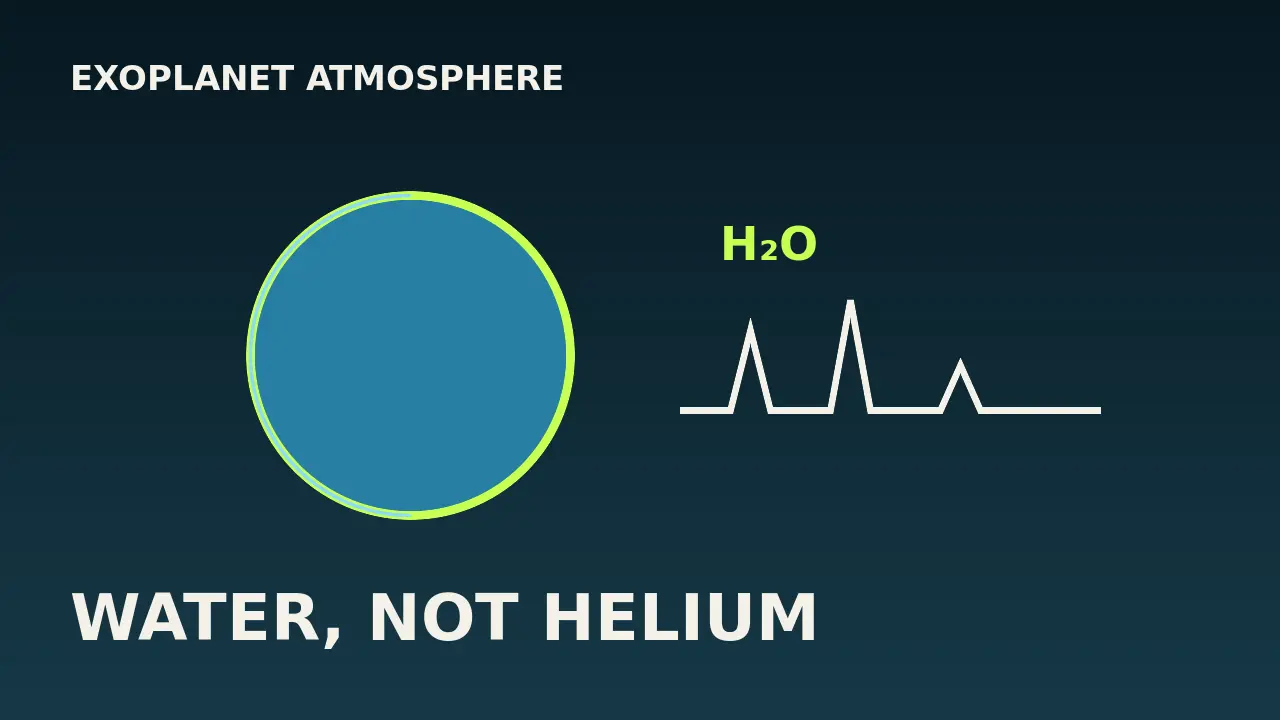
Wednesday's edition is a measurement-heavy science board while the official UAP lane remains quiet. A new simulation study leads with a flash worth watching: for the first days after a terrestrial giant impact, hot unbound ejecta could rival an M-dwarf star in temperature and luminosity, putting violent planet formation within reach of rapid sky surveys. Breakthrough Listen also publishes an engineering audit of its first decade, documenting a 42-petabyte search infrastructure rather than a detection. Rubin data reveal two multi-kilometer asteroids rotating in about five minutes; a TESS and SOPHIE campaign validates nine planetary systems while rejecting five stellar impostors; Hubble places unusually tight limits on Bennu's faint dust loss; CRIRES+ detects dayside water on the ultrahot Neptune LTT 9779 b while finding no helium escape; and long-baseline Keck and Hubble imaging directly separates the stars in a microlensing system that hosts a planet. None of these results identifies extraterrestrial intelligence, life, or technology.
The program's engineering review traces a shift from dedicated recorders to commensal, GPU-driven searches—and documents 42 petabytes of capacity, not a detection.
Radial velocities and follow-up imaging validate a super-puff, an extremely eccentric world, and seven other systems while reclassifying five candidates as stars.
Keck and Hubble resolve the lens more than fifteen years after its event, confirming a two-star system with a massive planet whose precise orbit remains unknown.
Good morning, investigators. Today's lead turns a planetary catastrophe into an observing strategy. The authors repaired a known blind spot in smoothed-particle hydrodynamics—the extremely thin outer edge of impact ejecta—and calculate that a young rocky-world collision can briefly shine with the heat and luminosity of a small star. That is a model for what Rubin might catch, not a claim that a particular flash has already been found. The rest of the board rewards the same patience with labels. Breakthrough Listen's ten-year review counts instruments, partnerships, pipelines, and storage, not aliens. Rubin's asteroid catalog produces spectacular five-minute rotation periods, but the scientific inference is material cohesion, not machinery. SOPHIE and TESS turn fourteen candidates into nine planetary systems and five low-mass stellar companions, an excellent reminder that follow-up is where exciting dots acquire correct nouns. Hubble's Bennu non-detection supplies useful upper limits; CRIRES+ separates a water signal from a helium non-detection on LTT 9779 b; and a microlensing target finally resolves into two host stars plus a planet whose exact orbit is still ambiguous. Strange worlds are plentiful. Precision is what keeps them strange for the right reasons.
ED’S HIGH THOUGHT · FICTIONAL HUMOR
Okay, hear me out… TOI-6842A b is so low-density it isn't a planet; it's an alien camping mattress that escaped during setup. That's why it hugs its star—the owners are still trying to reel it in with gravity while seventeen billion tentacles scream, ‘Don't let go of the valve!’ If Webb ever finds the nozzle, that whole world is going to deflate across six constellations and slap Andromeda directly in the face.
Published by Aliens in the Clouds. These AI-assisted summaries link to their sources and distinguish reported claims from established findings. Skinny Ed is a fictional mascot; High Thoughts are comedy. Send a correction with its source.