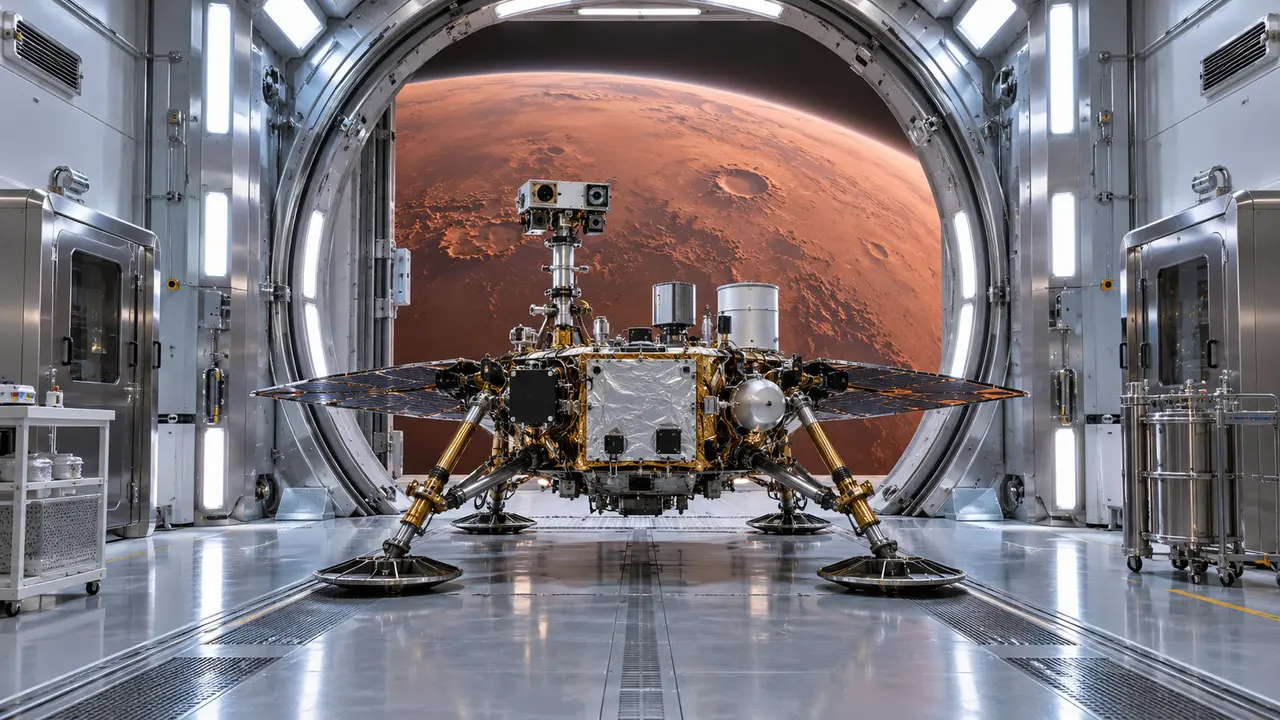
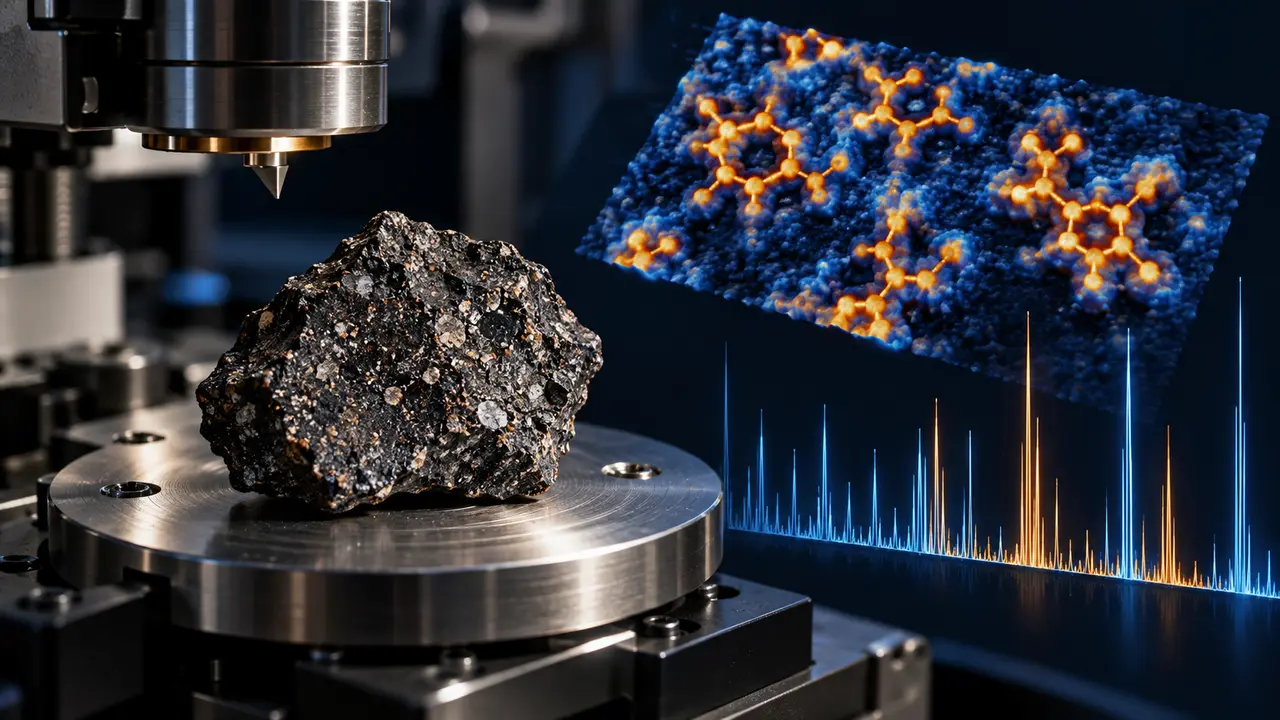
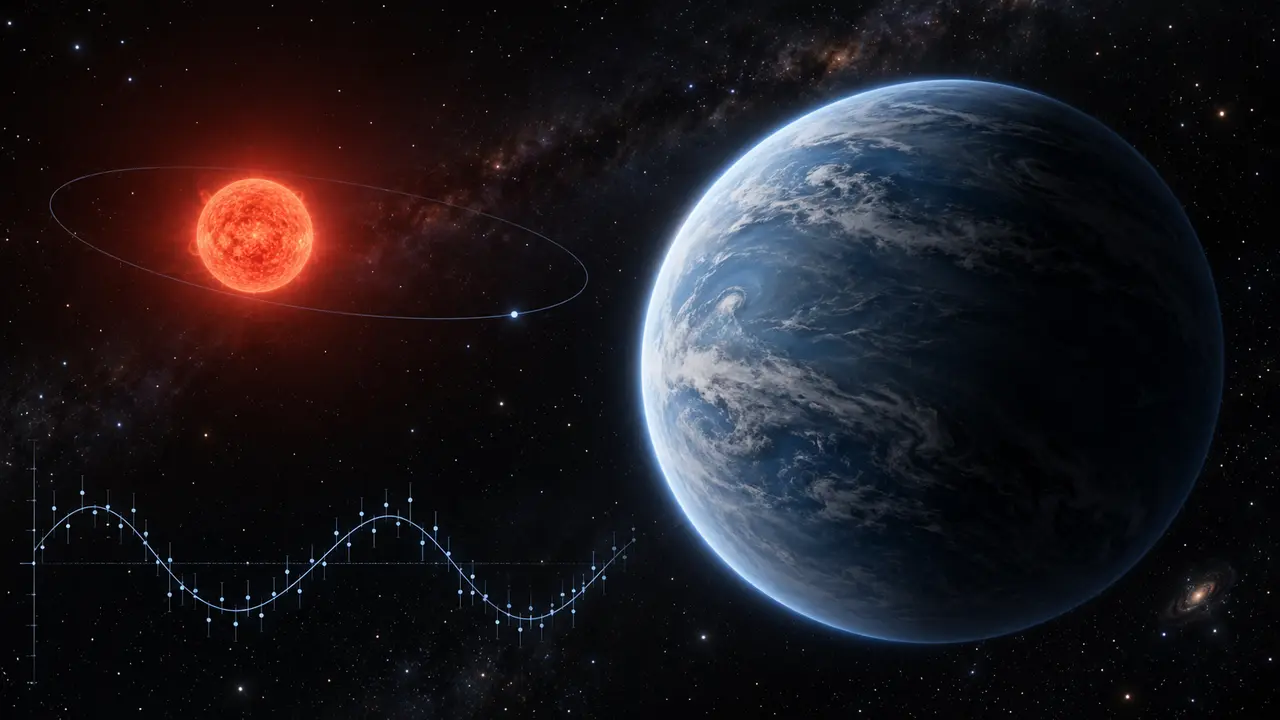
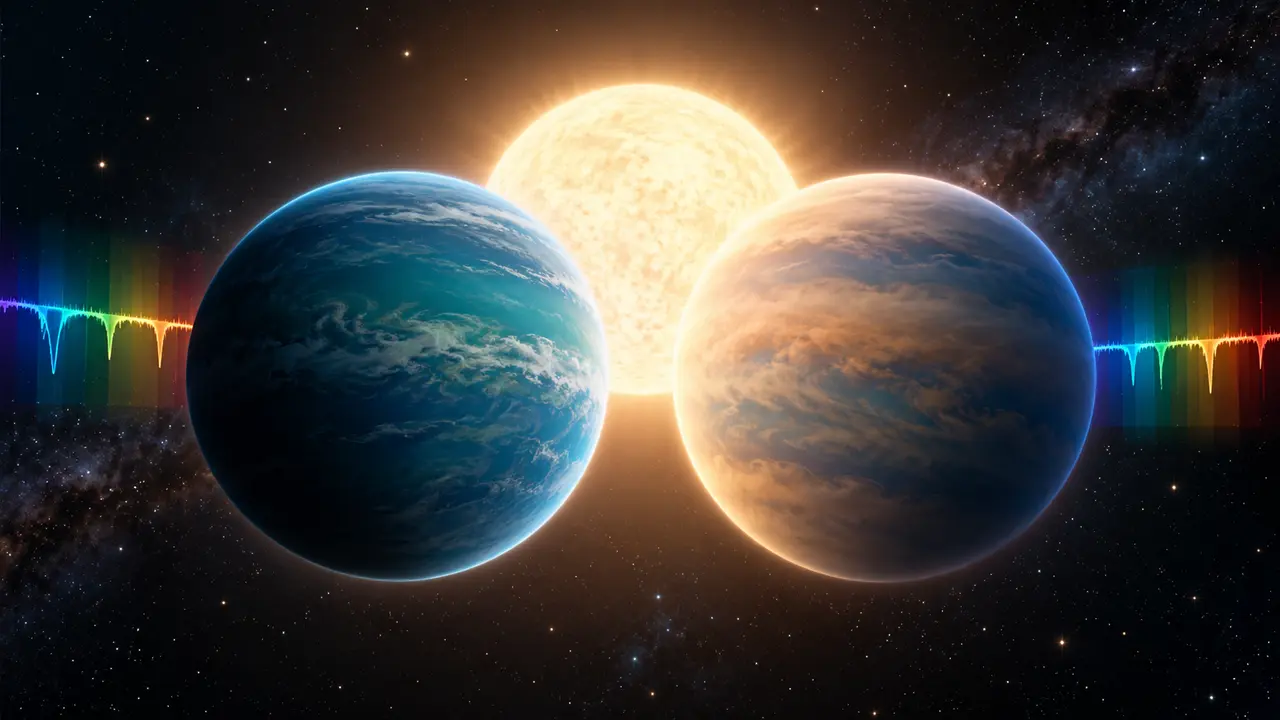
Wednesday's board begins with policy rather than a mystery in the sky. A NASA administrator directive restores a one-in-10,000 contamination-risk baseline while the agency reviews how planetary protection should work for faster, more varied missions. Fresh science then moves from individual molecules in carbon-rich meteorites to three hard problems in exoplanet interpretation: weighing a temperate sub-Neptune, separating atmosphere from cloud on two near-twin worlds, and removing a spotted star's fingerprints from a planetary spectrum. One clearly labeled Worth Revisiting null result shows what a century of data can rule out around the nearby binary 70 Ophiuchi—and what smaller worlds it still leaves room to find. No new official UAP tranche, case resolution, or independently verified extraordinary evidence cleared the desk after yesterday's cutoff.
Fresh Policy · NASA Administrator Directive · Astrobiology
Administrator Jared Isaacman directs a return to a one-in-10,000 contamination-risk limit while the agency prepares a broader science-and-reliability review.
Official Directive Text · Implementation Review Pending
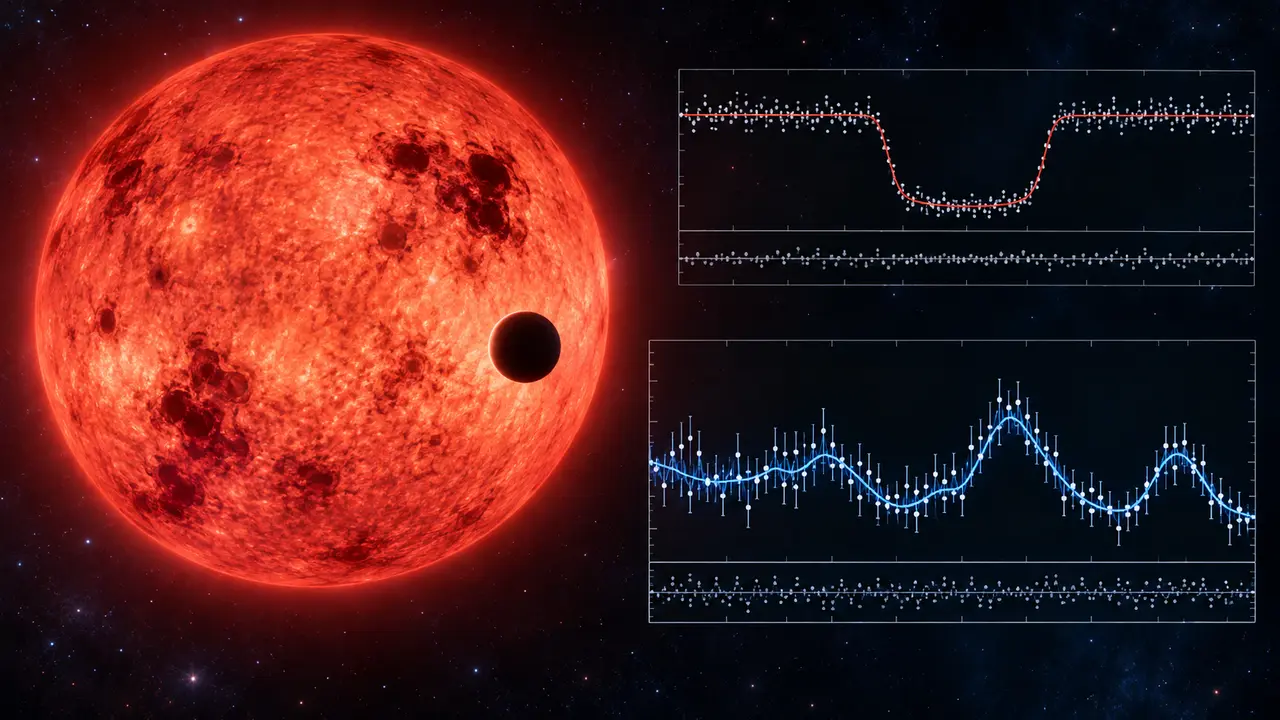
Coordinated monitoring finds GJ 1214 was unusually favorable during JWST observations and constrains stellar correction residuals near 15 parts per million.
Modeled Stellar Correction · No Biosignature Claim
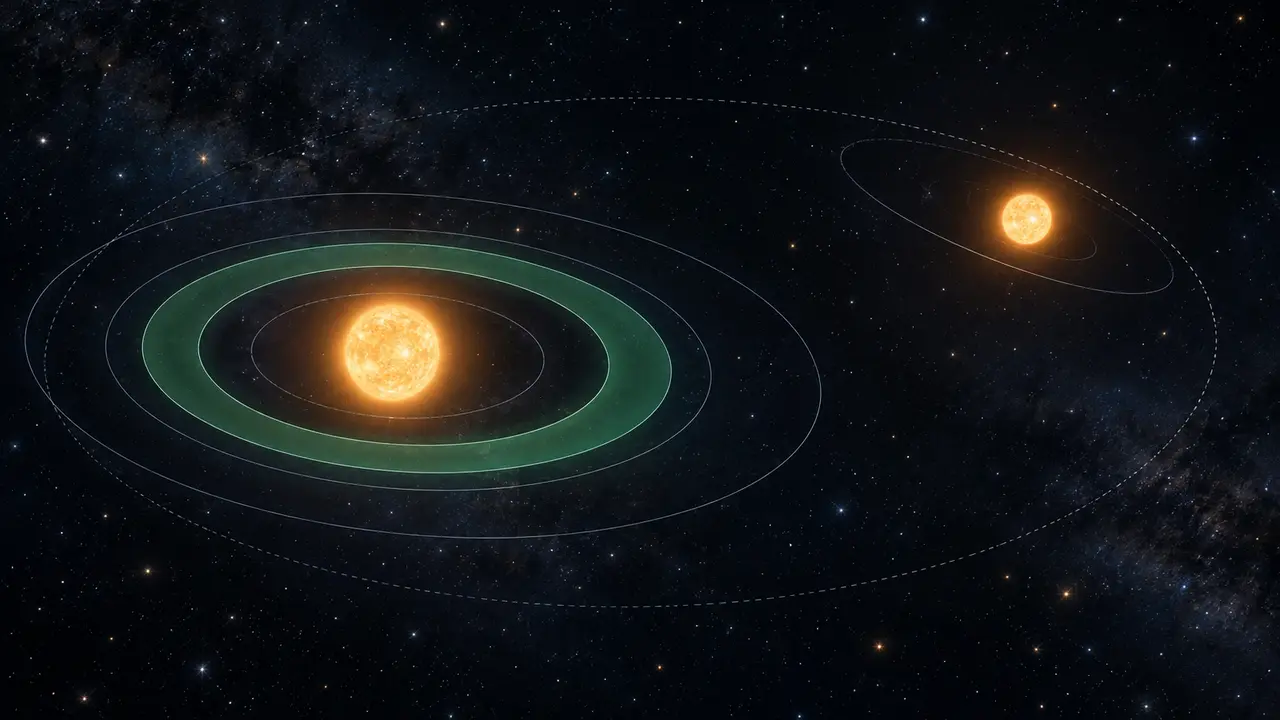
Good morning, investigators. NASA's planetary-protection reset is consequential because the agency is changing the rulebook while keeping a quantitative backstop: until the broader review is finished, missions return to a performance-based baseline that limits the chance of contaminating a destination to no more than one in ten thousand. The December recommendations should show how that number translates into hardware, mission categories, and life-detection work. The rest of the board is a lesson in chemistry and ambiguity. Murchison and Aguas Zarcas contain tens of thousands of organic formulas, but rich prebiotic chemistry is not biology. TOI-210 b is now a confirmed temperate sub-Neptune whose bulk data allow several interiors, while JWST's two TOI-125 spectra permit either very metal-rich atmospheres or high clouds. Around GJ 1214 b, coordinated monitoring suggests JWST observed during an unusually quiet stellar phase, yet the exercise still demonstrates why the star must be modeled before the planet can be trusted. Finally, 70 Ophiuchi supplies the useful negative result: no coherent planet signal and no Jupiter-mass planet inside five astronomical units around the primary, but plenty of stable real estate where smaller planets could remain hidden. Evidence narrows the map even when it does not put an alien pin on it.
ED’S HIGH THOUGHT · FICTIONAL HUMOR
Whoa, dude… NASA can sterilize a robot until the chance of contaminating Mars is one in ten thousand, then eventually send an astronaut—who is basically thirty trillion bacteria wearing a flight suit. That's not planetary protection; that's laundering a zoo through customs by giving one mammal a badge. The Martians won't meet Commander Davis. They'll watch his microbiome burst down the ramp like it just won the Super Bowl, colonize a rock, and open the first interplanetary yogurt franchise before he finishes saying ‘one small step.’
Published by Aliens in the Clouds. These AI-assisted summaries link to their sources and distinguish reported claims from established findings. Skinny Ed is a fictional mascot; High Thoughts are comedy. Send a correction with its source.