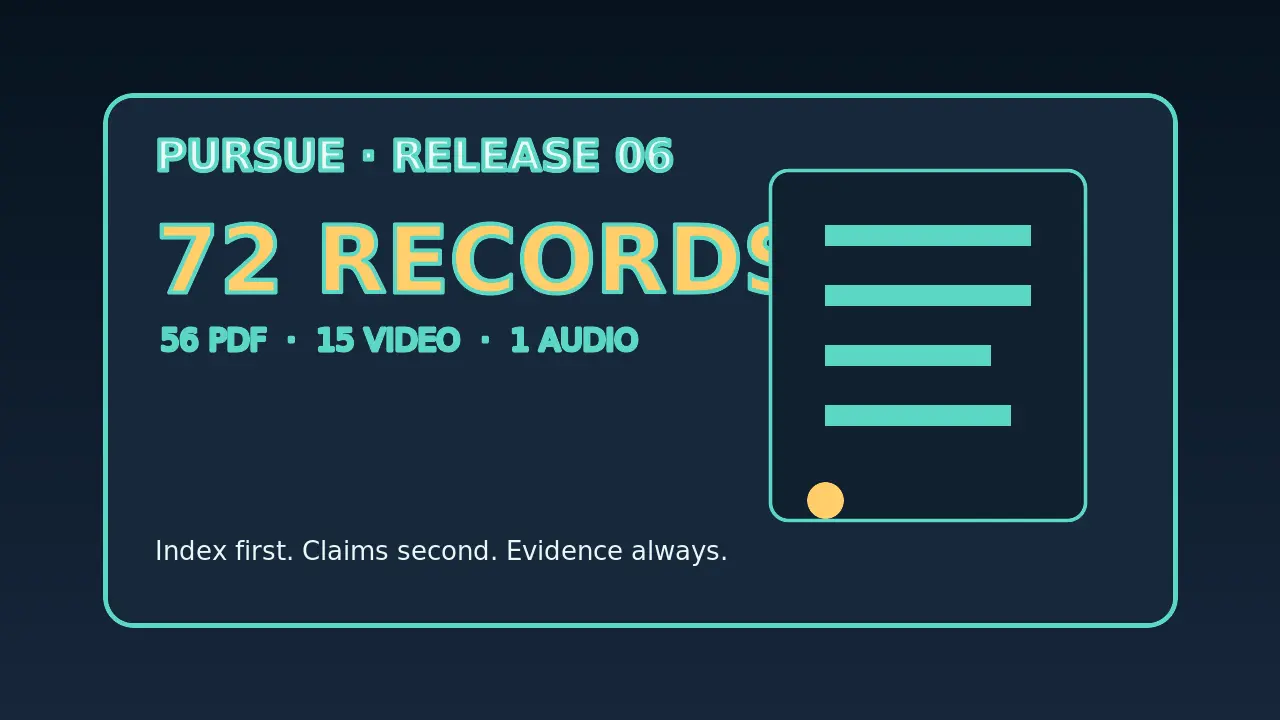
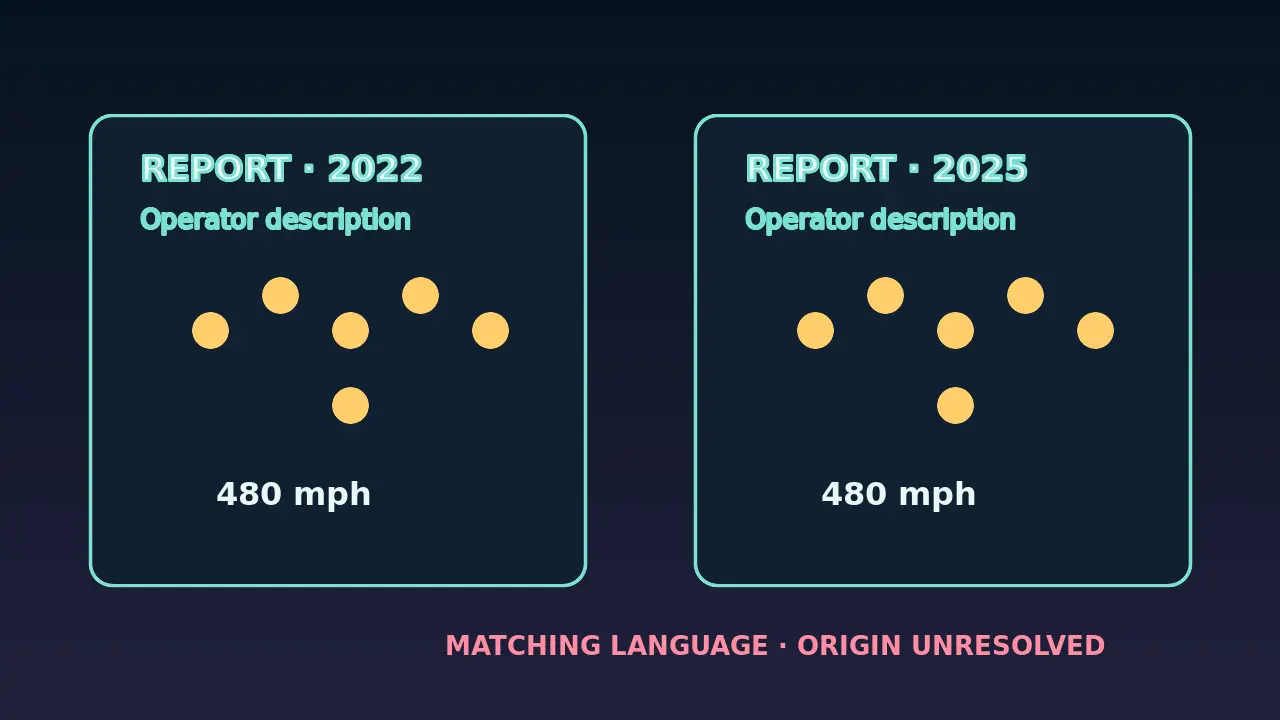
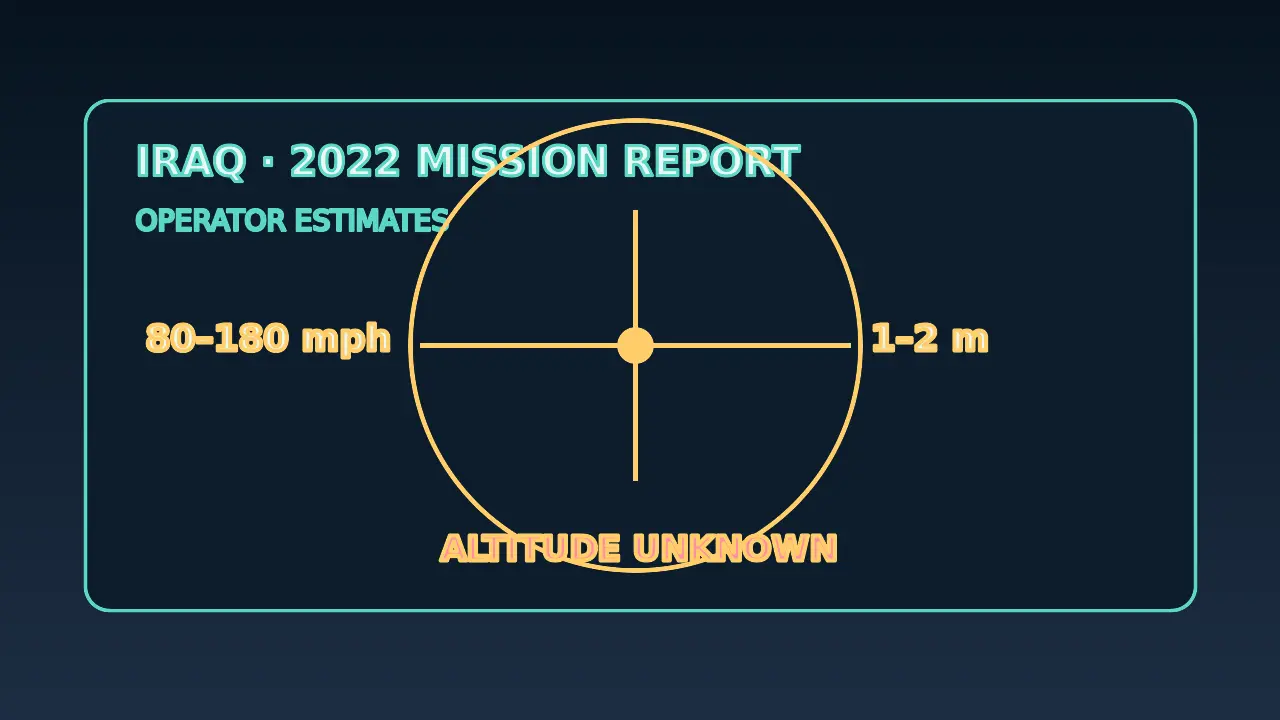
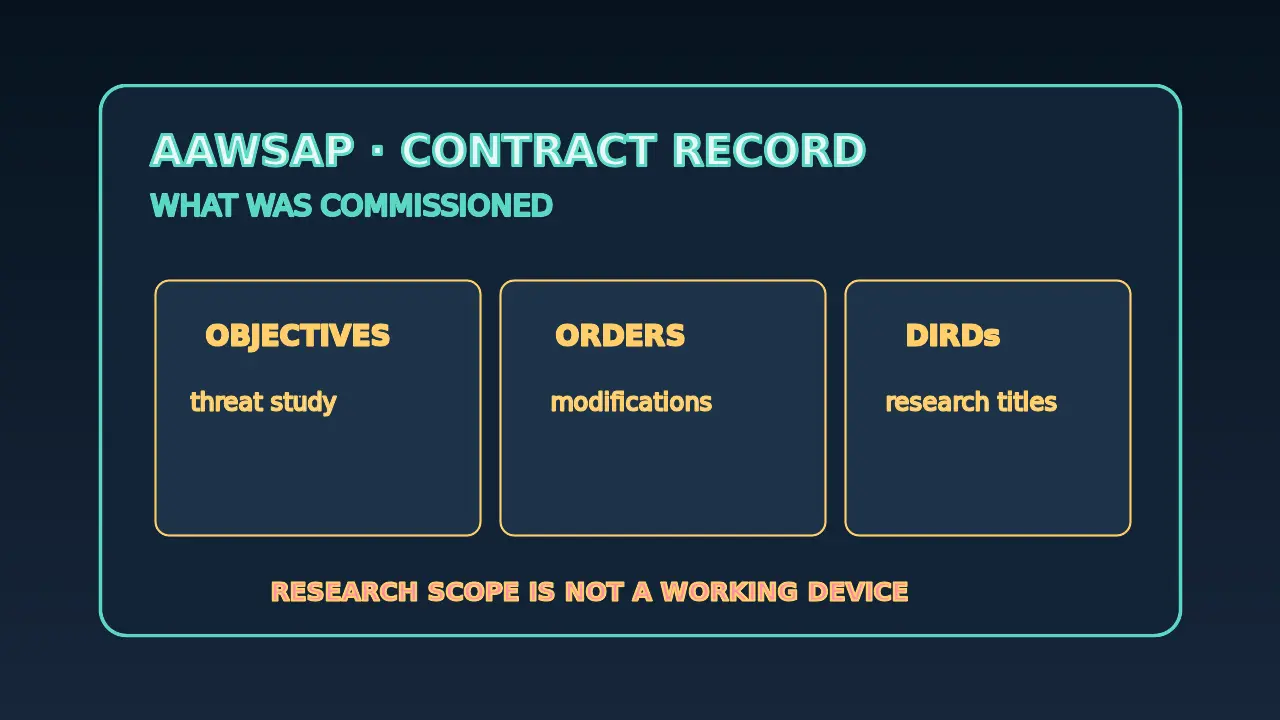
Saturday's report is a file-level look at PURSUE Release 06 rather than another victory lap around the download button. The portal currently returns 72 records—56 PDFs, 15 videos, and one audio file—correcting a late September 18 AITC desk tally of 71. Four recent mission reports preserve operator descriptions and speed or size estimates, but the public summaries do not provide the ranging, geometry, calibration, or full analytical record needed to verify those performance claims. Two reports from different years use strikingly similar language for six spherical objects moving at an estimated 480 miles per hour, a match that deserves provenance work before interpretation. The tranche also adds historical Tremonton material and an inspectable AAWSAP contracting trail whose provocative research titles are not demonstrations of working technology. Separately, three named whistleblowers have made a public appeal for authorization to speak outside government channels, while an accepted 3I/ATLAS model explores how billions of years of cosmic-ray processing could delay methane release. No item establishes extraterrestrial craft, nonhuman intelligence, or a verified exotic capability.
Official UAP Records Release · U.S. Department of War · PURSUE
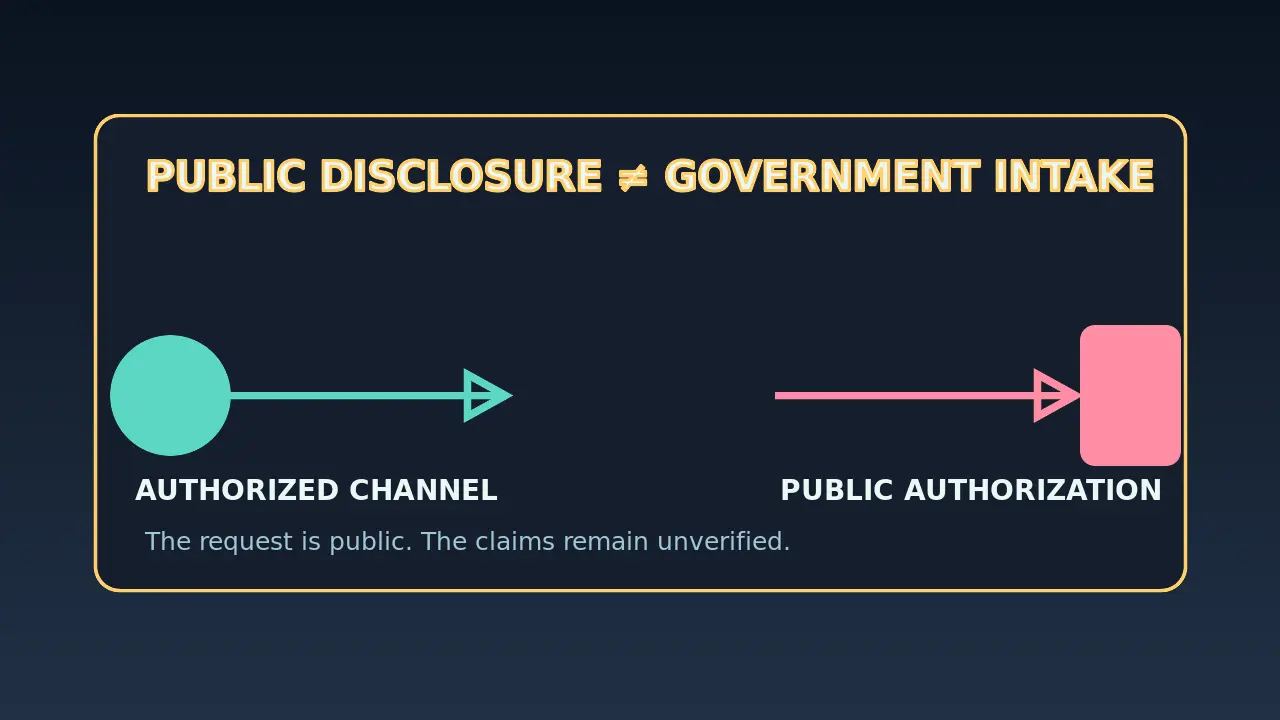
Dylan Borland, David Grusch, and Matthew Brown are pressing the president for public-disclosure authorization beyond PURSUE's government intake channel.
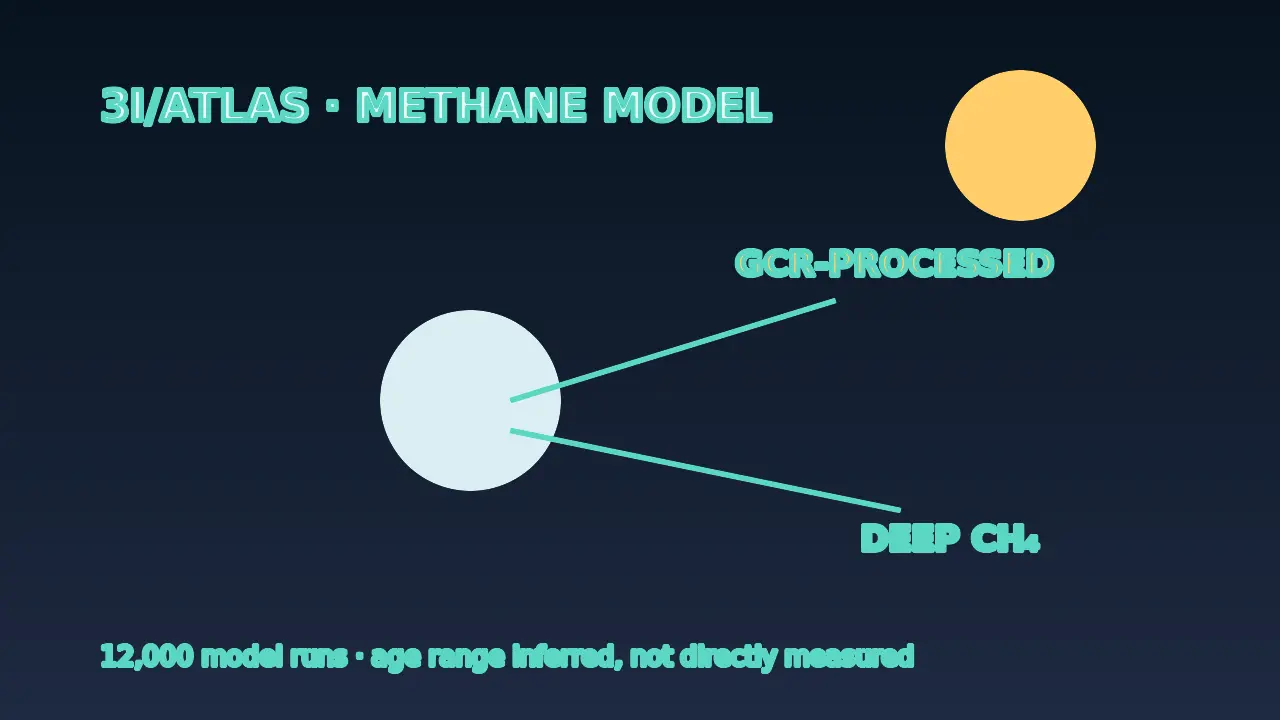
Twelve thousand simulations favor deep methane surviving beneath a cosmic-ray-processed surface, with a model-derived exposure age of 0.87 to 3.1 billion years.
Good morning, investigators. Release 06 is now large enough that the first job is accounting. The searchable portal lists 72 records, not 71, and its most useful feature may be the stable identifiers connecting mission reports to related stills, video, and audio. That lets us ask sharper questions. Why do 2022 and 2025 summaries describe the same six-sphere formation with the same 480-mile-per-hour estimate? What observation geometry supports the 80-to-180-mile-per-hour and one-to-two-meter figures in the Iraq report? Which conclusions changed as analysts revisited the 1952 Tremonton film? The correct answer is not to pick the most exciting interpretation; it is to preserve the chain from observer to sensor to summary and identify what the public record cannot yet reproduce. The AAWSAP documents similarly show what the government commissioned, not that every subject line became hardware. A fresh public appeal from Dylan Borland, David Grusch, and Matthew Brown makes the distinction between authorized government intake and public disclosure explicit, but their extraordinary claims remain claims. Over on the science desk, 12,000 simulations offer one explanation for 3I/ATLAS's delayed methane: deeper ice preserved it while cosmic rays altered the surface. Seven stories, one corrected count, and several reminders that a number without a measurement method is still wearing a question mark.
ED’S HIGH THOUGHT · FICTIONAL HUMOR
Whoa, dude… scientists think 3I/ATLAS stored methane deep inside for up to three billion years and released it only after the Sun warmed it. That comet did not bring us a message; it crossed interstellar space holding in one prehistoric fart because every planet it passed had the windows locked. Then it reached our Sun, relaxed for half a second, and gassed the entire Solar System. If aliens arrive behind it wearing hazard suits, they're not invading—they're the galactic hotel staff bringing the cleaning fee.
Published by Aliens in the Clouds. These AI-assisted summaries link to their sources and distinguish reported claims from established findings. Skinny Ed is a fictional mascot; High Thoughts are comedy. Send a correction with its source.