Peer-reviewed research
The brain’s timing may shape how we see motion
Recordings made before an ambiguous image appeared were associated with how people saw it move.
Briefed November 14, 2026 · Aliens in the Clouds
Preliminary human evidence · Accepted article
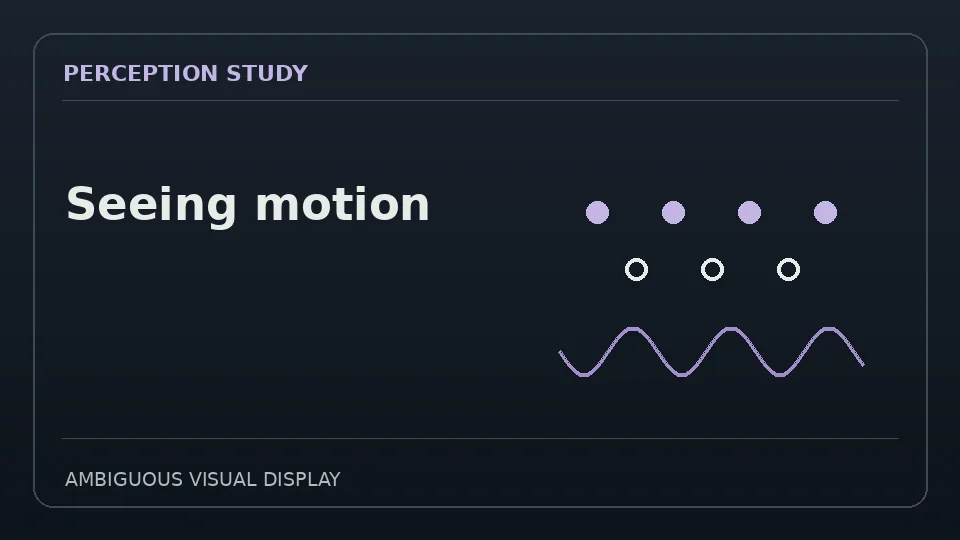
In a study published in Communications Biology, Yanni Zhang and colleagues used a visual display that can produce two different impressions of motion. Electrical activity in the brain before the display appeared was associated with which impression participants subsequently reported.
Only two participants had electrodes recording from both the early visual cortex and the prefrontal cortex. In those recordings, the relationship between the two regions appeared to depend on the timing of the visual cortex’s own rhythms. The authors used a model to reproduce the pattern, and describe the evidence for this proposed mechanism as preliminary.
Why it matters
An ambiguous display lets researchers hold the visual input steady while examining what changes in the viewer’s experience.
Published by Aliens in the Clouds. These AI-assisted summaries link to their sources and distinguish reported claims from established findings. Skinny Ed is a fictional mascot; High Thoughts are comedy. Send a correction with its source.