Technosignature Research
A new search targets flashes from hypothetical light sails
A draft model argues that leaked optical power from beam-driven transport could produce repeatable, tens-of-seconds stellar flashes in Roman, Rubin, and Euclid data.
Briefed September 2, 2026 · Aliens in the Clouds
Draft Model · No Detection
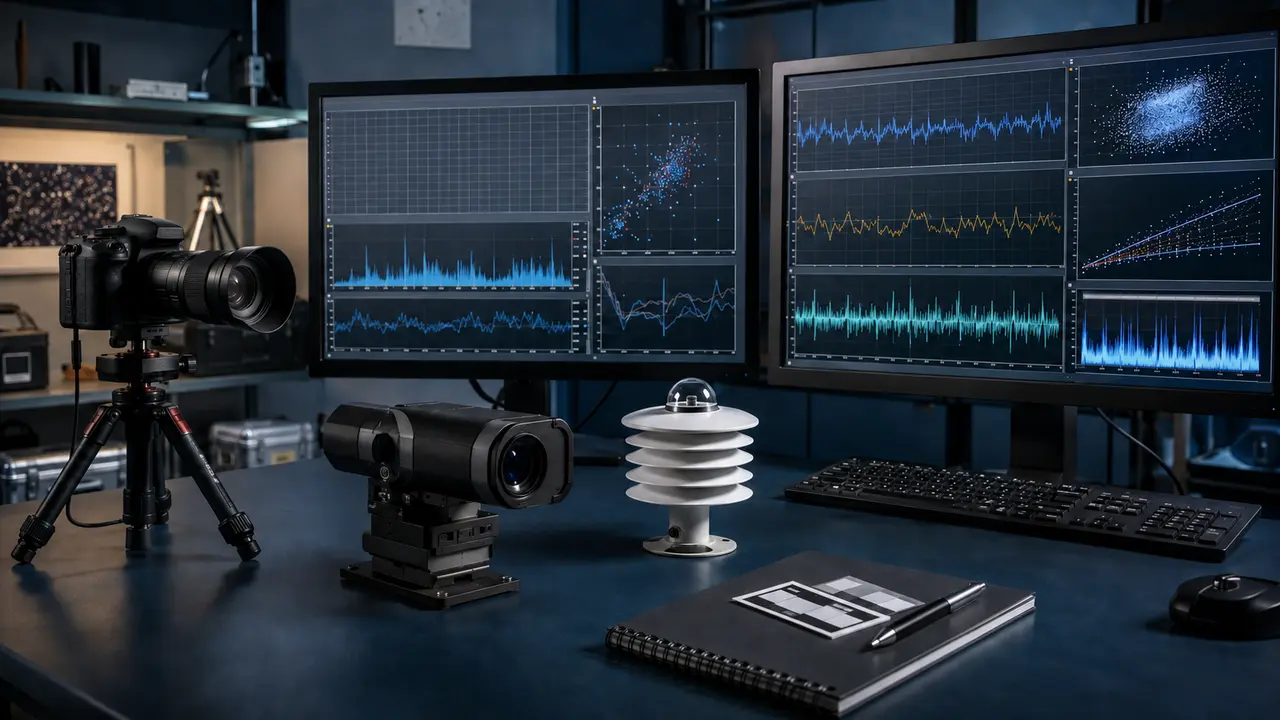
James Guillochon and Abraham Loeb extend an earlier radio-leakage model for beam-driven light sails into optical and near-infrared wavelengths. Their draft calculates that an Earth-Mars-style system operating near one micron could use a roughly 20- to 100-meter aperture and produce a point-source flash lasting tens of seconds as the beam sweeps past an observer.
The authors propose searching existing and planned Roman, Rubin, and Euclid time-domain data for a distinctive pair or triplet of same-band flashes. The forecast depends on particular engineering choices, including an unfocused, Fresnel-matched array that leaks substantial power past the sail. No such flash has been reported, the paper is a draft rather than a peer-reviewed detection study, and natural or instrumental backgrounds would still require careful exclusion.
Why it matters
It turns a broad technosignature idea into a defined light curve and a low-cost search strategy that can return either candidates or useful upper limits.
What the source establishes
Confirmed August 30 draft and September 1 author summary. The modeled signal is prospective; no light sail, artificial flash, or extraterrestrial transport system has been detected.
Published by Aliens in the Clouds. These AI-assisted summaries link to their sources and distinguish reported claims from established findings. Skinny Ed is a fictional mascot; High Thoughts are comedy. Send a correction with its source.