Lunar Exploration Concept
LunarLeaper gives Moon-cave exploration a jump plan
A published mission concept combines a legged robot with radar, gravity, imaging, spectroscopy, and surface-mechanics experiments.
Briefed September 12, 2026 · Aliens in the Clouds
Published Research · Mission Not Selected
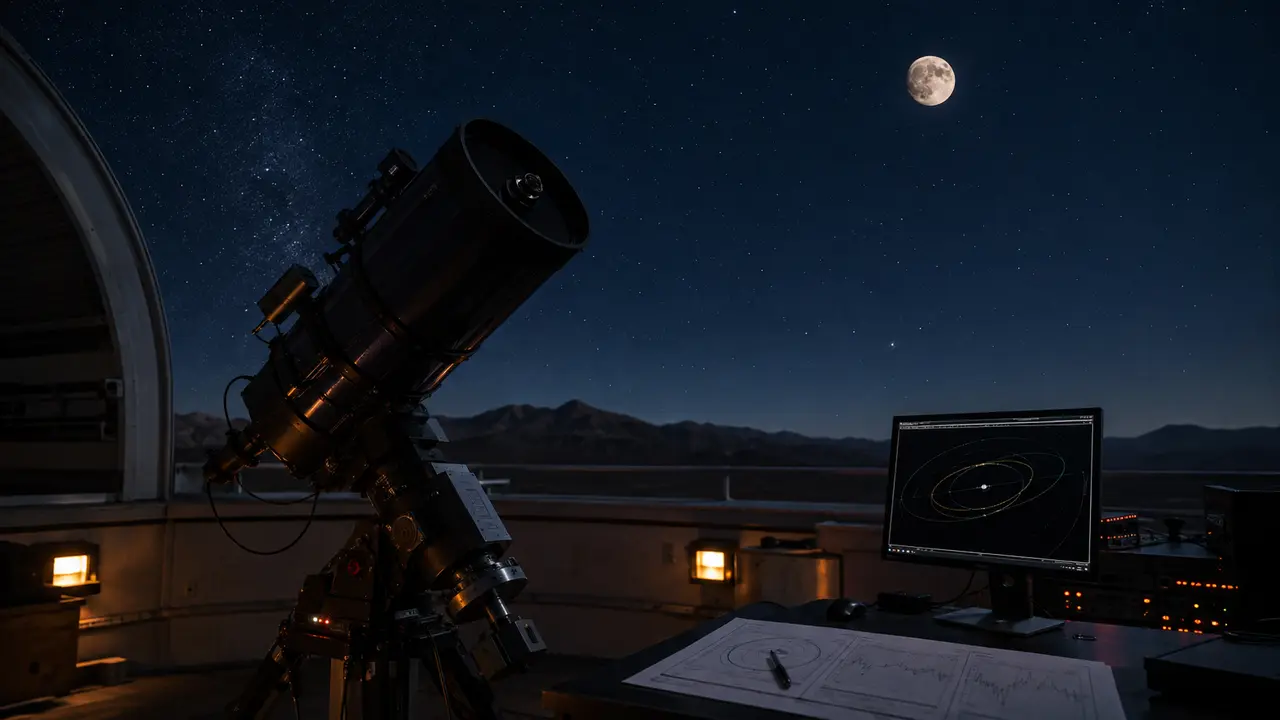
Anna Mittelholz and colleagues reviewed the morphology, formation, stability, and orbital detection of lunar pits and possible lava tubes, then assessed the measurements needed at a pit itself. Such openings expose volcanic layers and may lead into subsurface voids sheltered from radiation and temperature swings. Gravity measurements and ground-penetrating radar could test for hidden cavities, while high-resolution imaging and spectroscopy could map exposed rock and regolith that orbiters cannot see clearly.
Their LunarLeaper concept targets the Marius Hills Pit with a small legged robot designed to traverse rough pit-edge and funnel terrain. Its proposed payload includes a gravimeter, ground-penetrating radar, imager, spectrometer, and leg-based geomechanical tests. The study is a published mission architecture, not a selected flight program; no launch date, completed spacecraft, or confirmed accessible lava tube is reported.
Why it matters
Lunar caves could preserve a geological archive and offer sheltered locations for future exploration. The concept translates that promise into specific mobility risks, instruments, and testable measurements.
What the source establishes
Verified published study and mission concept. Lunar pits are observed, while connected lava-tube geometry and the proposed robot's field performance remain to be established in situ.
Published by Aliens in the Clouds. These AI-assisted summaries link to their sources and distinguish reported claims from established findings. Skinny Ed is a fictional mascot; High Thoughts are comedy. Send a correction with its source.