Space-Safety Research
New model finds orbital debris can look stable before randomness tips it
A mathematical preprint argues that collision variance and fragment accumulation can trigger runaway risk earlier than deterministic average-value models predict.
Briefed August 26, 2026 · Aliens in the Clouds
Preprint · Model-Based Finding
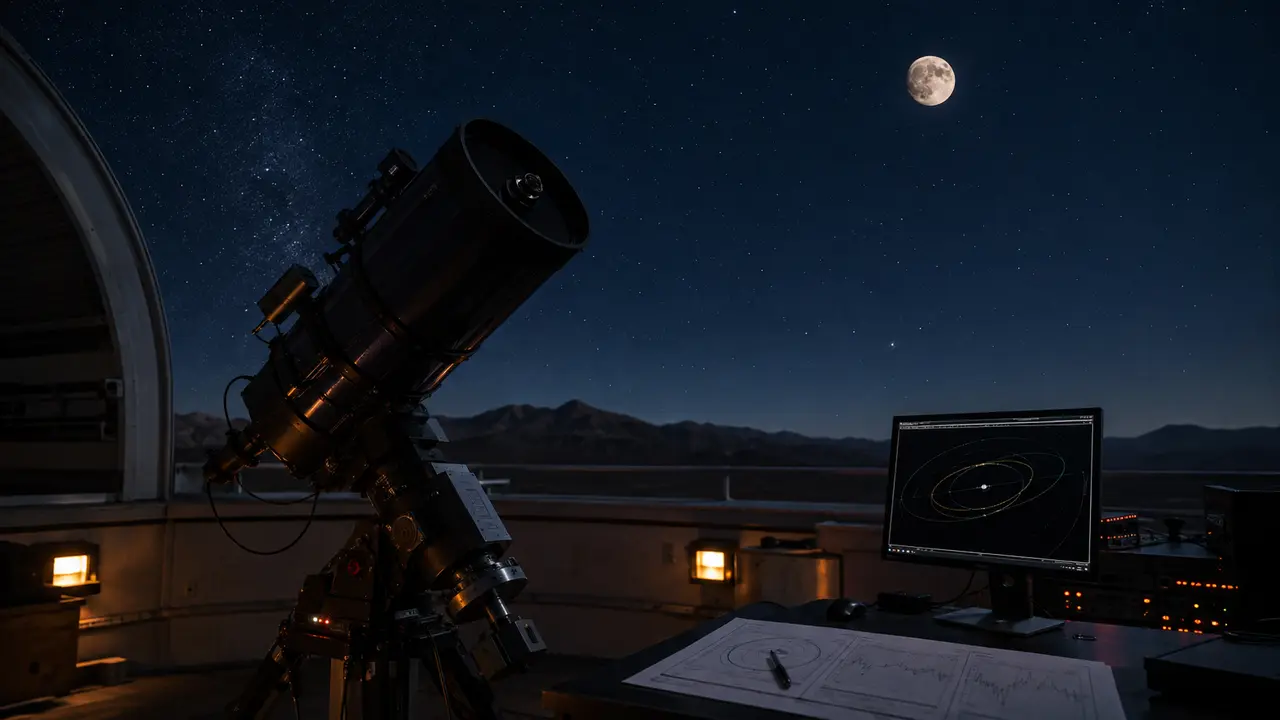
A preprint submitted August 24 models Low Earth Orbit as interacting populations of intact spacecraft and fragments, adding randomness in collision timing, breakup size, and launch schedules to a previously deterministic framework. The authors derive different behavior across fast spacecraft, intermediate debris, and slow critical time scales rather than treating one average trajectory as the complete forecast.
At the modeled critical threshold, fragment counts can move into a runaway Kessler cascade through fluctuations even when the average drift and intact-satellite population appear controlled. The authors argue that constellation planning, debris removal, and orbital-slot decisions should account for variance as well as mean populations. This is a theoretical preprint, not a measured prediction that a cascade is imminent, and its assumptions require scrutiny and comparison with higher-fidelity orbital models.
Why it matters
A denser orbital environment creates more objects, fragments, and reentries that observers may report; understanding the uncertainty in that environment improves both space safety and identification context.
What the source establishes
Confirmed: the authors published the mathematical model and its conclusions. Developing: the work is a non-peer-reviewed preprint and does not forecast a specific collision date or prove that Low Earth Orbit has crossed its critical threshold.
Published by Aliens in the Clouds. These AI-assisted summaries link to their sources and distinguish reported claims from established findings. Skinny Ed is a fictional mascot; High Thoughts are comedy. Send a correction with its source.