Technosignature Research
JWST resolves two Dyson-sphere candidates into background galaxies
Higher-resolution imaging separates two red dwarfs from dusty galaxies that created misleading infrared excesses in earlier WISE data.
Briefed August 30, 2026 · Aliens in the Clouds
Worth Revisiting · Preprint · Two Candidates Eliminated
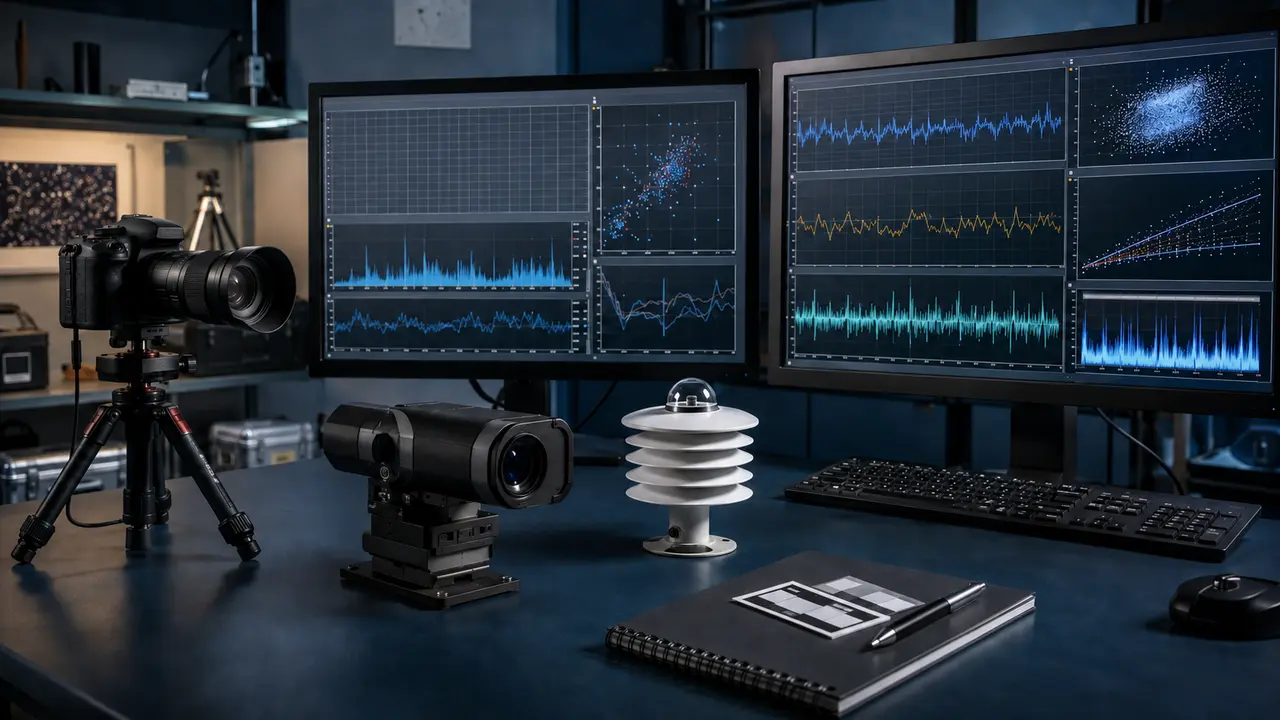
Project Hephaistos researchers used JWST mid-infrared imaging and spectroscopy to follow up candidates D and E, two red dwarfs whose WISE measurements had shown potentially interesting infrared excesses. JWST resolved a separate background galaxy within roughly one arcsecond of each star, demonstrating that the excess emission did not originate near either red dwarf.
The team identifies one contaminant as a hot, dust-obscured galaxy at about redshift 0.9 and the other as a dusty star-forming galaxy near redshift 0.4. The result eliminates these two targets as Dyson-sphere candidates; it does not test every star in the broader catalog. The study remains a preprint, but the high-resolution separation is a direct example of follow-up observations removing ordinary astronomical impostors.
Why it matters
Technosignature searches become more credible when they publish false positives and show exactly how better instruments distinguished the star from a blended background source.
What the source establishes
Confirmed JWST follow-up reported in a research preprint. Candidates D and E are explained by background galaxies; no alien megastructure was detected.
Published by Aliens in the Clouds. These AI-assisted summaries link to their sources and distinguish reported claims from established findings. Skinny Ed is a fictional mascot; High Thoughts are comedy. Send a correction with its source.