Research interview excerpt
How Hessdalen’s cameras help sort meteors from other lights
In a newly published interview excerpt, Fred Pallesen explains how repeated exposures help the Norwegian project read its sky recordings.
Briefed November 23, 2026 · Aliens in the Clouds
Monitoring system documented · Individual lights require analysis
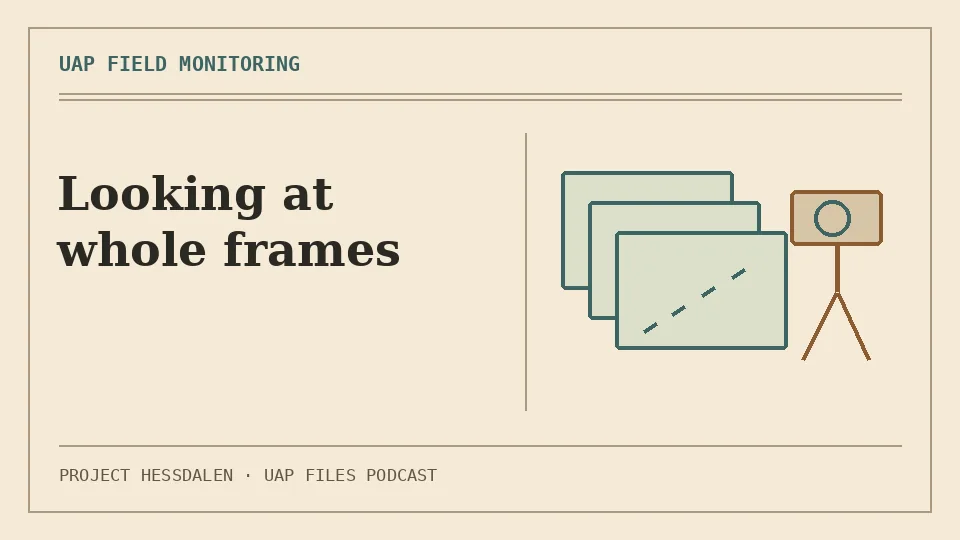
UAP Files Podcast released an excerpt on November 22 from an earlier conversation with Project Hessdalen’s Fred Pallesen. He describes the Blue Box, the valley’s automated monitoring station, and how the project builds composite images from successive camera frames. An object moving through those frames can leave a series of separated marks.
Pallesen points to the dotted pattern a meteor can leave in a stacked image. That makes it easier to compare a recording with familiar events. The project also streams cameras and posts stacked images for the public to inspect. The excerpt explains the setup using earlier recordings.
Why it matters
An isolated point of light is hard to interpret. A public sequence lets other people compare how the same equipment records familiar events before debating what an unusual one shows.
Published by Aliens in the Clouds. These AI-assisted summaries link to their sources and distinguish reported claims from established findings. Skinny Ed is a fictional mascot; High Thoughts are comedy. Send a correction with its source.