Research
The Galileo Project documents how a UAP observatory should handle its data
A technical preprint describes calibrated multi-sensor collection, real-time processing, provenance, and post-analysis workflows.
Briefed August 3, 2026 · Aliens in the Clouds
Worth Revisiting
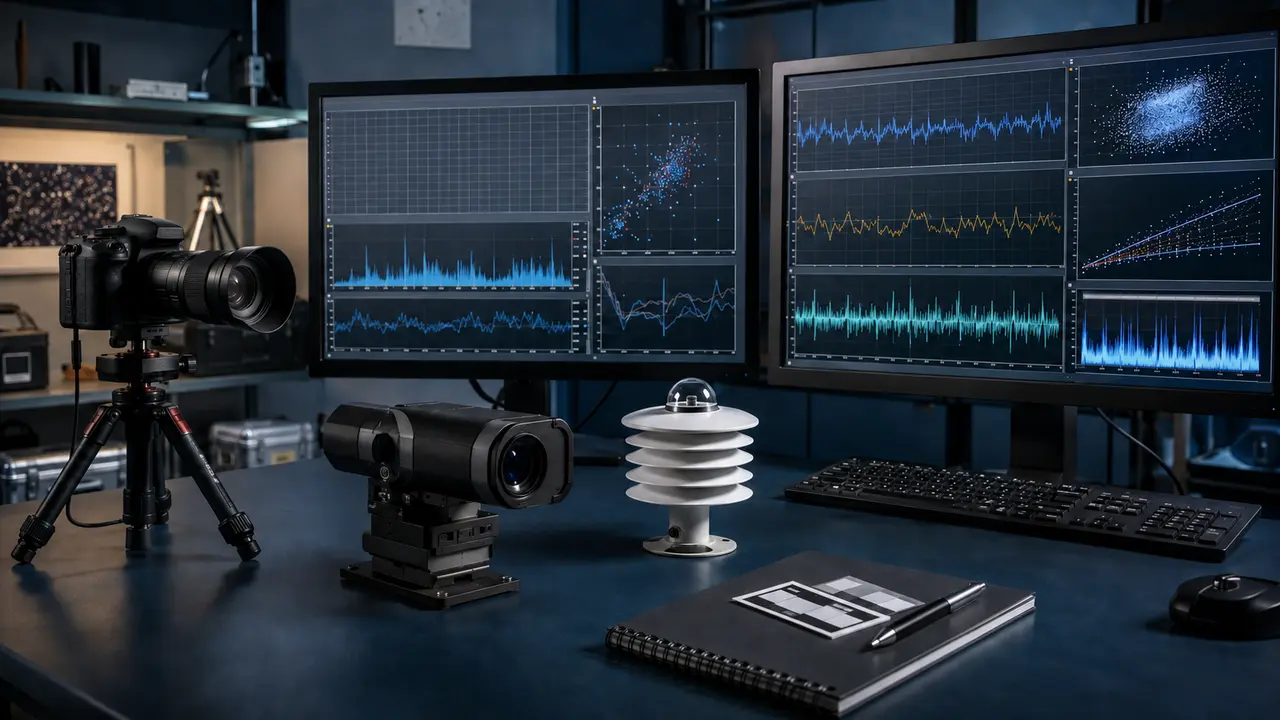
Galileo Project researchers describe an Observatory Class Integrated Computing Platform built around optical, infrared, radio, acoustic, magnetic, and environmental inputs. The architecture separates collection and near-real-time processing at the observation site from later scientific analysis and system-performance review.
The paper’s most important contribution is procedural: synchronized time, calibration, data provenance, multi-sensor fusion, and repeatable workflows. It describes infrastructure and preliminary system work; it does not report confirmation of extraordinary craft or technology.
Why it matters
Claims of unusual motion are only as strong as the timing, calibration, metadata, and comparison data behind them.
Published by Aliens in the Clouds. These AI-assisted summaries link to their sources and distinguish reported claims from established findings. Skinny Ed is a fictional mascot; High Thoughts are comedy. Send a correction with its source.