Space & Identification
Tracked rocket stage hits the Moon—and leaves a measurable plume
A predicted August 5 impact was supported by telescope detections, while direct crater imagery is still pending.
Briefed August 5, 2026 · Aliens in the Clouds
Confirmed
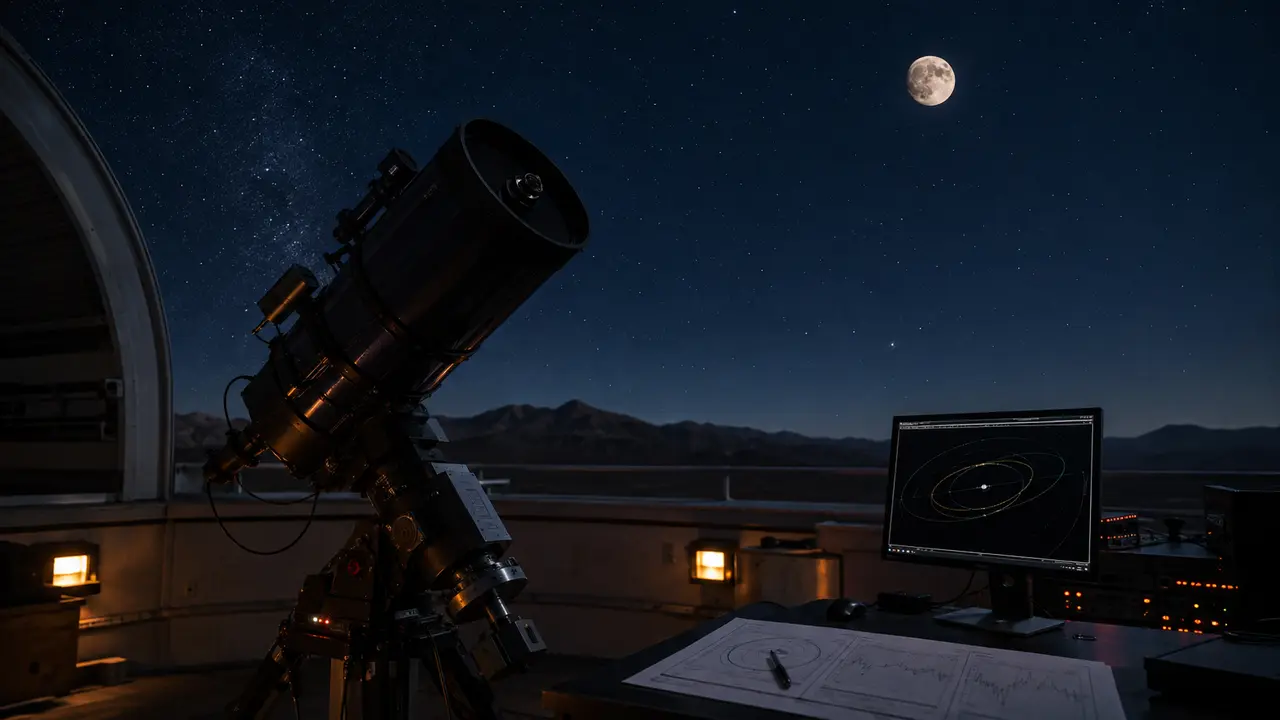
The Associated Press reports that a spent Falcon 9 upper stage struck the Moon near Einstein Crater on August 5 after more than a year in an unstable orbit. A telescope in Chile did not image the impact itself, but detected a stream containing sodium and lithium that astronomers identified as the resulting debris plume.
The object’s trajectory and expected impact time had been calculated in advance from more than a thousand observations. NASA’s Lunar Reconnaissance Orbiter is expected to look for the new crater during a later pass, so the present evidence is strong tracking plus plume spectroscopy—not yet a direct before-and-after crater image.
Why it matters
It is a timely example of how prediction, independent observation, and follow-up imaging can move an unusual event from speculation toward identification.
Published by Aliens in the Clouds. These AI-assisted summaries link to their sources and distinguish reported claims from established findings. Skinny Ed is a fictional mascot; High Thoughts are comedy. Send a correction with its source.