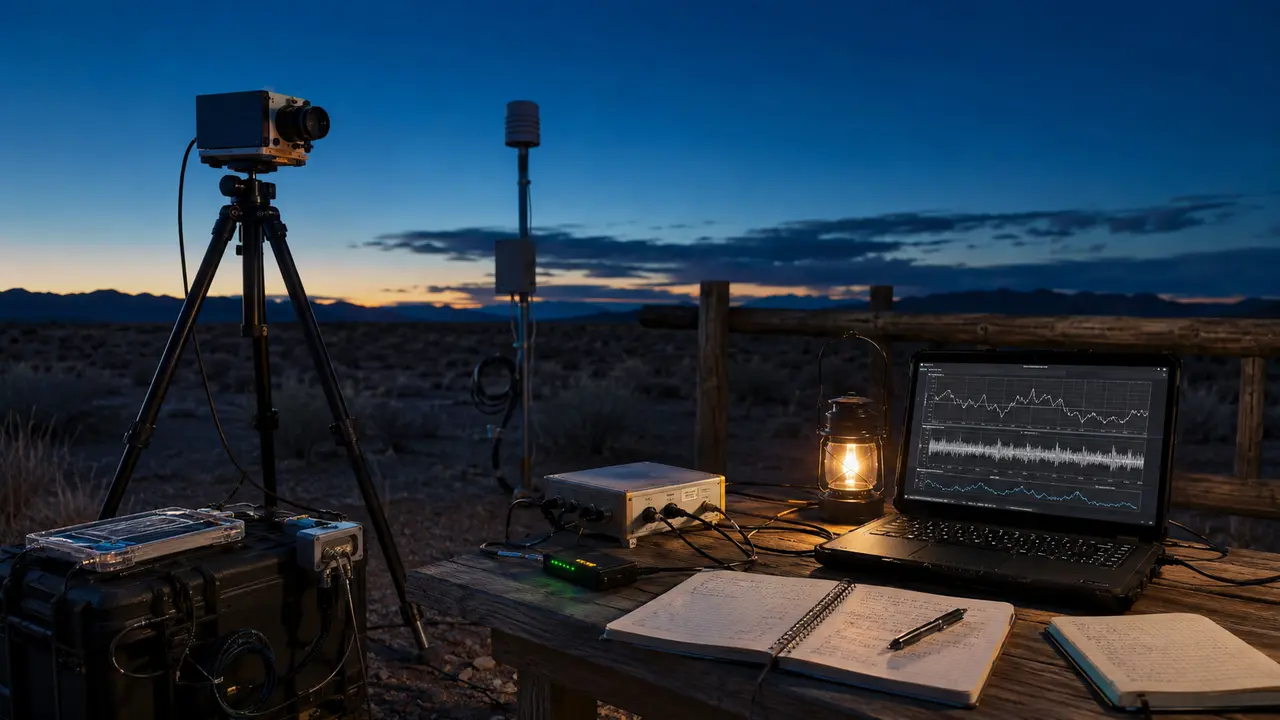
No second breaking development cleared the evidence desk this morning, so today’s board opens six official doors into the international record—from Chile’s active casework to national archives in Brazil, New Zealand, Britain, and the United States.
Official Investigation Program · Chile DGAC — SEFAA
Worth Revisiting: SEFAA accepts evidence from pilots, crews, and citizens, publishes resolved cases by year, and frames its work around aviation safety.
Worth Revisiting: the official OVNI collection preserves reports, questionnaires, correspondence, photographs, drawings, audio, and video from across decades.
Worth Revisiting: fifteen cataloged volumes preserve military and civilian reports, investigations, correspondence, clippings, and privacy-conscious redactions from 1952 to 2009.
Worth Revisiting: the original ‘Unexplained Lights’ correspondence can be read within the wider Ministry of Defence reporting series instead of as an isolated legend.
Worth Revisiting: the Reading Room entry for ‘Flying Saucers’ exposes the identifier, original date, release date, page count, collection, and source scan needed for a traceable citation.
Worth Revisiting: NARA’s dedicated guide links UFO and UAP material across presidential collections rather than leaving researchers to guess which administration held what.
Good morning, investigators. The verified breaking-news drawer is nearly empty today, and that is information—not an invitation to promote yesterday’s rumor in a new hat. Instead, we are taking a world tour through institutions that preserve or actively investigate unusual aerial reports. Chile publishes resolved cases and accepts new evidence; Brazil maintains hundreds of Air Force records with photographs, audio, video, and drawings; New Zealand’s released files span 1952 to 2009; Britain’s archive keeps the Rendlesham correspondence in its original bureaucratic neighborhood; the CIA Reading Room exposes document-level metadata; and the U.S. National Archives connects UAP material scattered across presidential libraries. Different systems, same lesson: a report becomes more useful when its creator, date, custody, and investigative context survive the trip. I brought six passports and one snack. The snack has already cleared customs.
ED’S HIGH THOUGHT · FICTIONAL HUMOR
Whoa, dude… what if every country’s UFO archive is one room in a planetary escape game? Britain hid a clue in DEFE 24/1948/1, Brazil gave us 743 puzzle pieces, New Zealand supplied fifteen instruction manuals, and the CIA left a six-page hint from 1952. The aliens are not hiding—they’re watching eight billion humans argue over the clues while nobody checks beneath the final filing cabinet. That drawer is obviously New Zealand. It is at the bottom of the planet.
Published by Aliens in the Clouds. These AI-assisted summaries link to their sources and distinguish reported claims from established findings. Skinny Ed is a fictional mascot; High Thoughts are comedy. Send a correction with its source.