Official Evidence Guide
How a slow object can look impossibly fast on a moving sensor
Worth Revisiting: AARO’s public FAQ points investigators toward range, platform motion, field of view, and parallax before turning apparent screen speed into real velocity.
Briefed August 13, 2026 · Aliens in the Clouds
Worth Revisiting
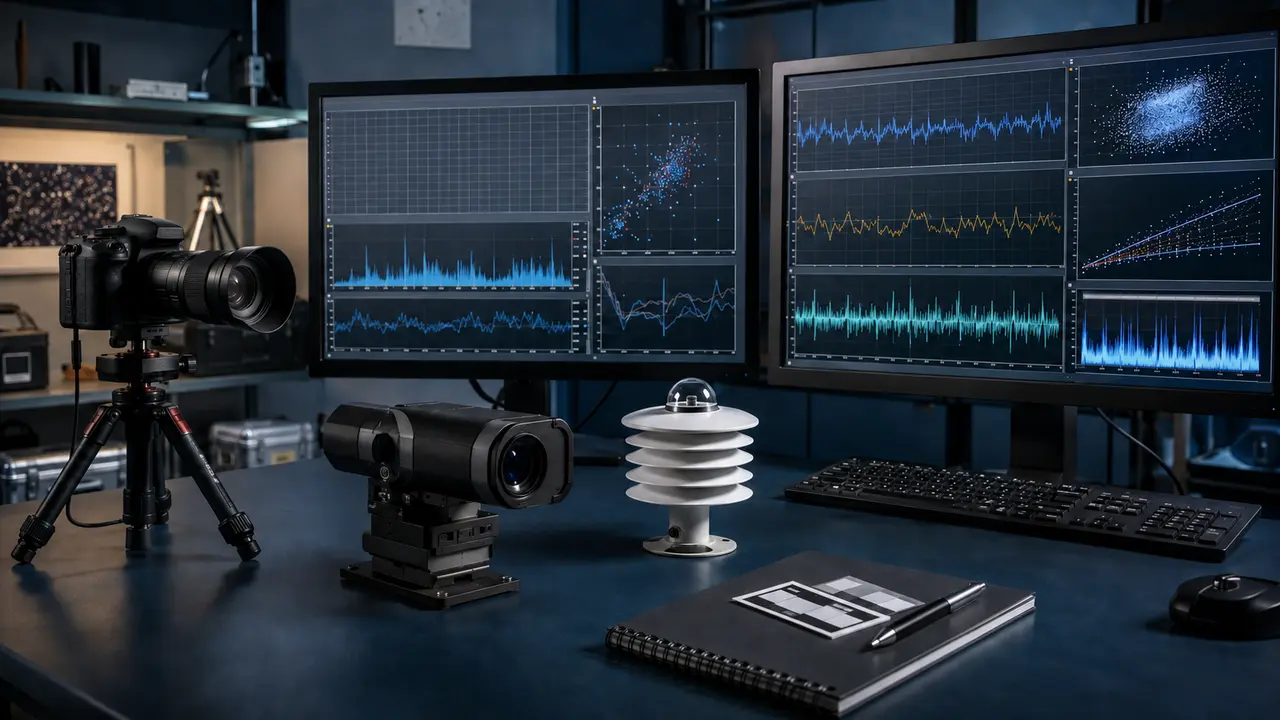
AARO’s FAQ addresses a recurring UAP puzzle: why something can look extremely fast to an observer or in a sensor display but later be assessed as stationary or moving slowly. A camera aboard a moving aircraft changes its own position and viewing angle, while a target’s unknown range can make ordinary relative motion sweep dramatically across the background.
Field-of-view changes, digital enhancement, glare, tracking behavior, and parallax can add to the effect. None of those mechanisms automatically identifies a particular object, but they define measurements an analyst needs before converting movement on a screen into a speed through three-dimensional space.
Why it matters
Apparent motion is often the most exciting part of a UAP video—and one of the easiest quantities to overstate when distance and geometry are missing.
What the source establishes
Sensor geometry offers testable explanations for apparent speed; it is not a universal resolution. A reliable velocity estimate still needs range, platform position and motion, timing, pointing angles, and calibration data.
Published by Aliens in the Clouds. These AI-assisted summaries link to their sources and distinguish reported claims from established findings. Skinny Ed is a fictional mascot; High Thoughts are comedy. Send a correction with its source.